An Eyewitness Account from Cable Street
03.10.26
Mark Perryman recalls the role of Phil Piratin in stopping Mosley and the British Union of Fascists
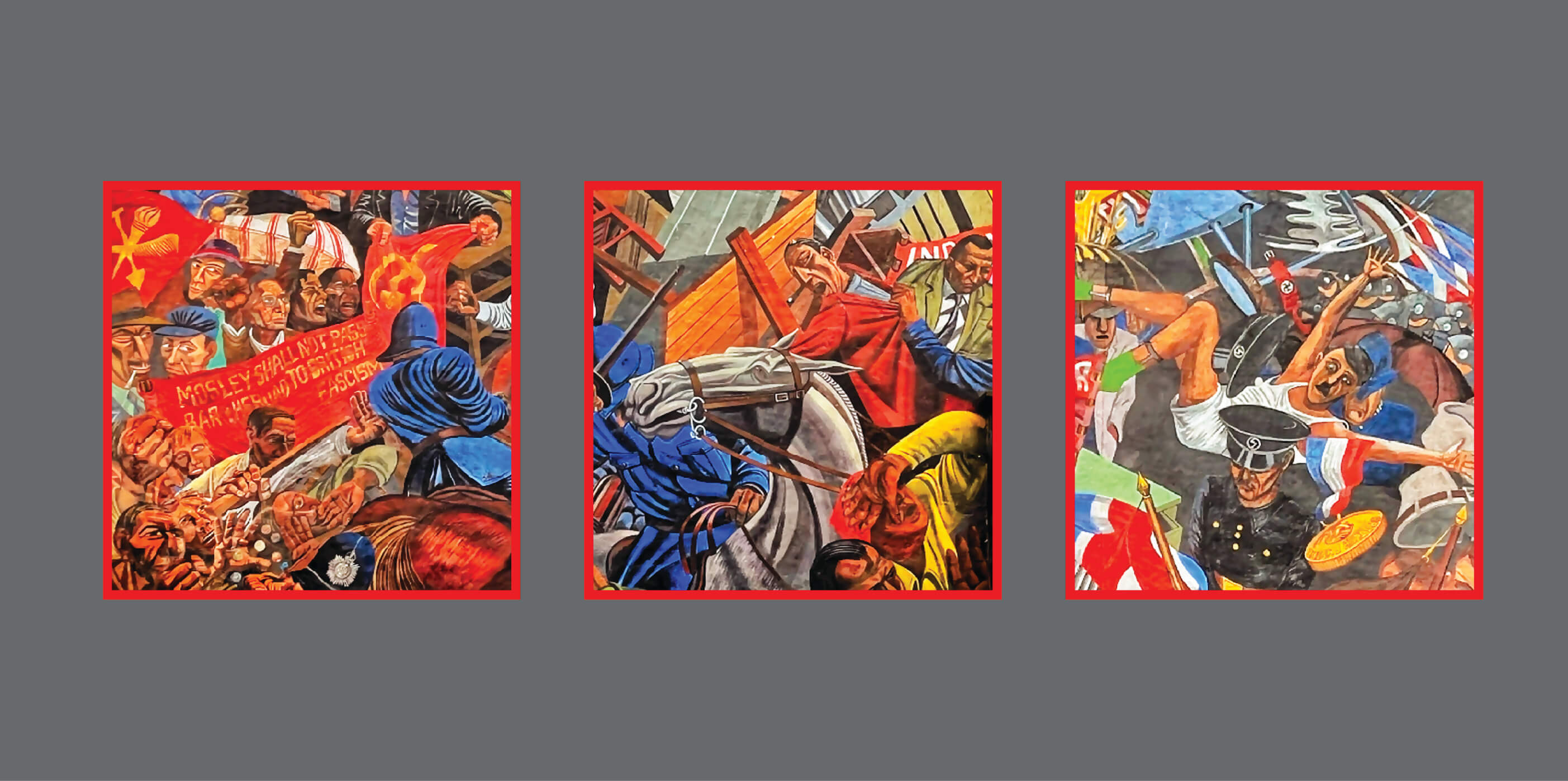
Phil Piratin was a Communist Party activist and organiser in Stepney, East London who played a key role in the Cable Street people's blockade which successfully stopped Sir Oswald Mosley leading his British Union of Fascists (BUF) marching through the East End ninety years ago, 4th October 1936.
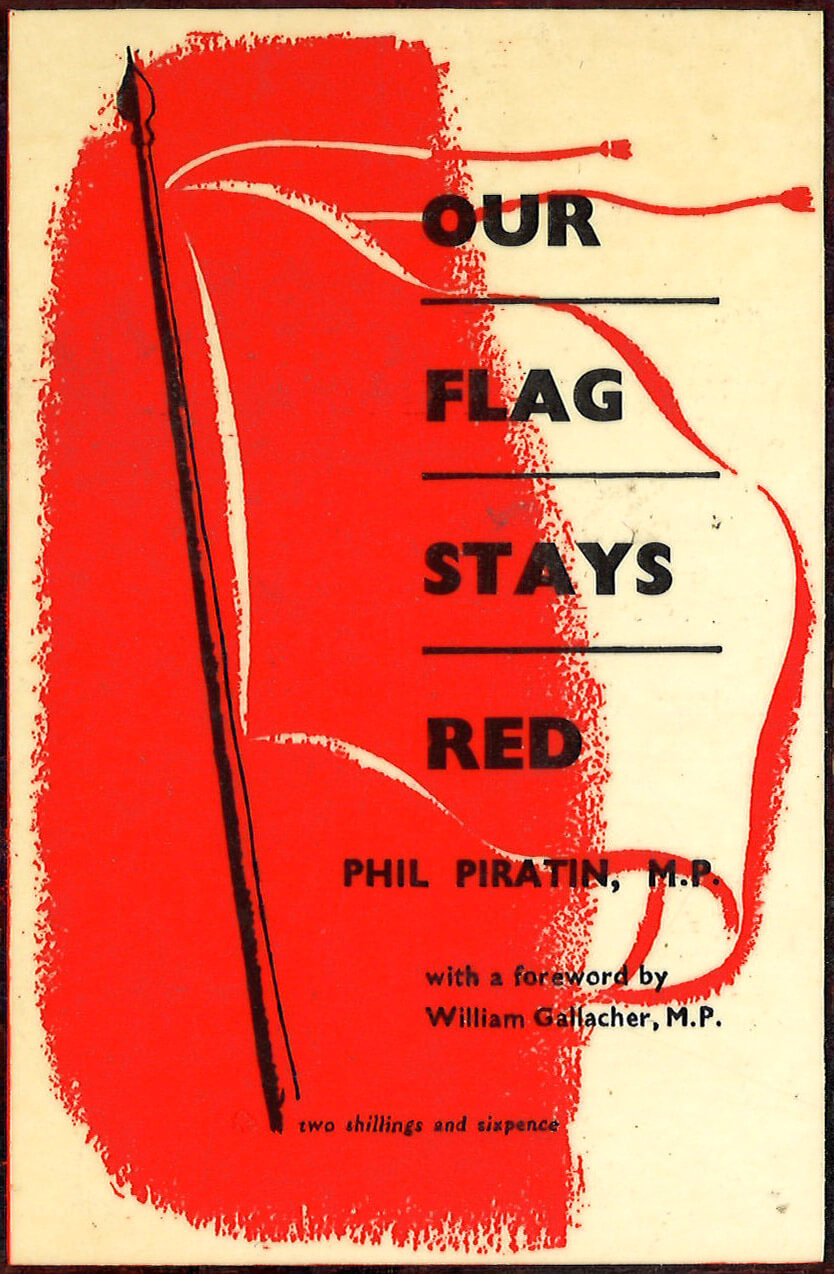
In his autobiographical account Our Flag Stays Red, first published in 1948, Piratin details the community campaigning that not only built the blockade but was to break the support for the BUF in East London which by the march numbered 4000 paid-up members and countless thousands more supporters.
Controversially Piratin argued that instead of demonising these proto-fascists a deep-rooted community activism was required to both understand this support for Moseley, and detach it from him and his fascism. Attending undercover a Blackshirts march he observed:
" I knew some of the people, some of the men wore trade union badges. This had a terrific effect on my attitude to the problem. While we would fight Mosley's thugs where would did you get by fighting the people? We should ask ourselves: 'Why are these ordinary working-class folk (it was too easy to call them lumpen) supporting Mosley?' Obviously because Mosley's appeal, struck a chord. There were certain latent antisemitic prejudices, it is true, but above all these people, like most in East London, were living miserable, squalid lives. Their homes were slums, many were unemployed. Those in work were often in low-paid jobs. Therefore we should help these people to improve their conditions of life, in the course of which we could show them who was really responsible for their conditions, and get them organised to fight their real exploiters."
It was a view initially rejected by the Communist Party, perhaps not unsurprisingly with the immediate campaigning focus on building the support to stop Mosley marching. A campaign Piratin not only supported but played a leading role in. Unlike those whom he and his fellow campaigners might have expected to join in:
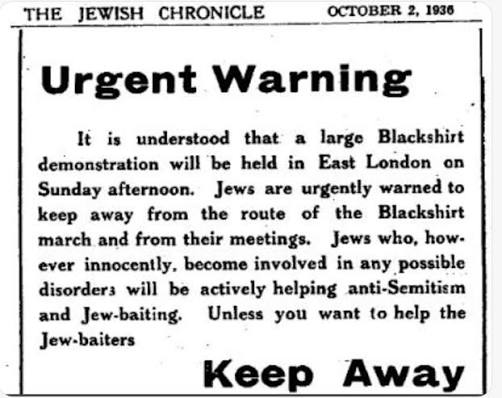
"The Labour Party, the Daily Herald the News Chronicle, the Board of Deputies all appealed to the people to stay away."
Thankfully thousands of Labour Party members, trade unionists, the Jewish community ignored this 'advice' and on the 4th October helped make history. Piratin's eyewitness account provides the detail:
" On the morning of 4 October there was a feeling of impending battle. Loudspeaker vans, organised by the Communist Party and the Jewish ex-Servicemen's movement, were touring the intended route of Mosley's march. The Young Communist League, led by Harry Gross (later, an International Brigader, he was killed in the Spanish Civil War) marched around the streets with slogan-banners. The mood of the police was already to be seen even early in the day. The Jewish ex-Servicemen's Association, composed solely of the British Legion, had organised a morning march around Stepney to advertise the counter-demonstration. They wore their medals and decorations. Led by the British Legion standard, they conducted their march in excellent discipline, and were very well received. At about half-past eleven they were about to pass westwards along the Whitechapel Road crossing New Road. The police had put a cordon across this and refused to let them march. It was evident that the police intention was to interfere with this peaceful demonstration be ex-servicemen. A fight took place with the police for the rights of ex-Servicemen to march in their own borough. Mounted police attacked. The British Legion standard was fought for; eventually the police captured it, and in front of the eyes of these ex-Servicemen tore the British Legion Union Jack to shreds and smashed the pole to pieces. The police had begun to 'maintain law and order.'
From an early hour people also began to gather at Aldgate with the police shoving them around. Then the police really moved in. 6,000 foot police and the whole of the Metropolitan mounted division were on duty, posted between Tower Hill and Whitechapel. Sir Philip Game, the Commissioner of Police, had his headquarters in a side street off Tower Hill. Police wireless vans moved around, reporting frequently. A police 'observation' aeroplane flew low overhead. Every chief police officer in London was on duty. Special constables had been drafted in to take the place of the 'regulars' withdrawn from other parts of the city.
After the police came the fascists. They came in coaches from all parts of London and the country. Here and there were scuffles, coach windows were smashed and some early casualties taken away. The fascists were due to march at 2pm. The police, aiming to keep Leman Street clear, tried to force a path through the crowd, estimated to be at least 50,000, that blocked the whole of Gardner's Corner. At the junction of Commercial Road and Leman Street a tram had been left standing by its anti-fascist driver. Before very long this was joined by others. Powerless before such an effective road-block, the police turned their attentions elsewhere. Time and again they charged the crowd; the windows of neighbouring shops went in as people were pushed through them. But the police could make no impression on this immense human barricade.
It was obvious that the fascists and the police would now turn their attention to Cable Street. We were ready. The moment this turn became apparent the signal was given to put up the barricades. We had prepared three spots. The first was near a yard where there all kinds of timber and other oddments, and also an old lorry. An arrangement had been made with the owner that this old lorry could be used as a barricade. Instructions had been given about this, but when someone shouted 'Get the lorry!' evidently not explaining that it was in the nearby yard, some of the lads, looking up the street, saw a stationary lorry about 200 yards away. They went along, brought it back, and pushed it over on its side before anyone discovered that it was not the lorry meant to be used. Still, it was a lorry, and supplemented by bits of old furniture, mattresses, and every kind of thing you would expect to find in box-rooms, it was a barricade which the police did not find easy to penetrate. As they charged, they were met with milk bottles, stones and marbles. Some of the housewives began to drop milk bottles from the roof tops. A number of police surrendered. This had never happened before, so the lads didn't know what to do, but they took away their batons, and one took a helmet for his son as a souvenir.
Cable Street was a great scene. I have referred to 'the lads'. Never was there such a unity of all sections of the working class as was seen on the barricades at Cable Street. People whose lives were poles apart, though living within a few hundred yards of each other, bearded Orthodox Jews and rough-and-ready Irish Catholic dockers - these were the workers that the fascists were trying to stir up against each other. The struggle, led by the Communist Party, against the fascists had brought them together against their common enemies, and their lackeys.
Meanwhile, charges and counter-charges were taking place along the 'front' from Tower Hill to Gardner's Corner. Many arrests were made, many were injured. It was the police, however, who were carrying on the battle, while the fascists lurked in the background, protected by a 'fence' of police. Mosley was late. As soon as he arrived, in a motor-car, a brick went through his car window.
It was later rumoured Sir Philip Game had been on the phone to the Home Secretary, Sir John Simon, and had pleaded with him to forbid he march. But Sir John was adamant. Sir Philip Game, however, made up his own mind. He forbade the march and told Mosley to argue it out with the Home Secretary. The fascists lined up, saluted their leader, and marched through the deserted City of London to the Embankment and dispersed, defeated."
For Piratin though, 4th October was simply a new beginning. Housing was the key issue for East Enders. It was Piratin's development of a growing support for activism around it, rather than the very necessary spectacle of resistance at Cable Street, that a year later, 1937, was to see the wholesale defeat of the BUF in East London.
A massive wave of evictions of tenants from Paragon Mansions, or rather slums, in Mile End was planned. Piratin once again led the resistance :
" In conversation, we asked a member of the BUF about to be evicted what the fascists had done for him. He said that he had raised the matter, but they had no intention of doing anything. This was a very valuable piece of information to be used by us in disillusioning many BUF members and supporters."
Resistance to the evictions was patiently built and when they were defeated minus any help from the fascists:
"The news went round very quickly, the barricades came down, and the 'ammunition' was disposed of. BUF membership cards were ripped up in disgust, we didn't have to ask."
During the World War Two blitz Piratin took on a new campaign - to improve the East End's shelter conditions. Mid-September 1940, in the midst of a days-long airborne bombardment, he gathered together around 70 Stepney residents. They stormed the Savoy Hotel, which Piratin had heard (from hotel staff) had built a luxurious bomb shelter.
" We decided that what was good enough for the Savoy Hotel parasites was good enough for Stepney workers and their families."
The storming locals faced opposition, but Piratin's 70 men, women, and children overcame hotel security easily. They demanded tea and butter, and demanded to pay the same price they would at Lyons, an affordable cafe chain popular with 1940s working classes.
Headlines splashed around the world drawing attention to the gulf between Blitz conditions for the rich and poor.
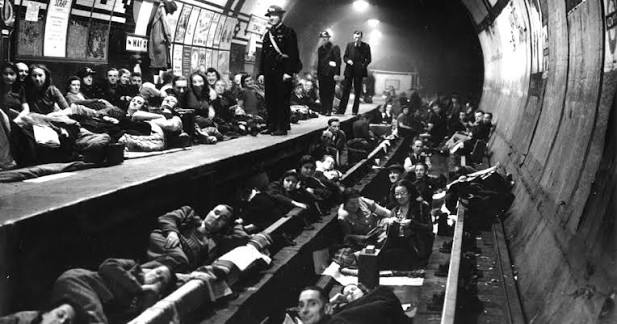
While the Government improved East End shelters, the success at the Savoy emboldened Piratin and his fellow campaigners. The Government had locked the Underground during air raids. The Home Secretary, Herbert Morrison, had argued that children were in danger of falling on the tracks.
Four days after the Savoy invasion, Morrison announced that underground stations would open as shelters. Another Piratin victory.
And it was this and other victories that directly led in the 1945 General Election to Phil Piratin winning his 'home' seat, Mile End one of only three Communist MPs ever to be elected to the House of Commons. As a community activist he never really fitted in. Perhaps rather typically his highest-profile moment as an MP took place in the House of Commons cafeteria when he punched a journalist, Thomas Daniel Lucy, who had insulted him as a Jew and a communist.
In the 1980s I was working for the magazine Marxism Today. It was where, via the magazine's merchandising arm, 'Central Committee Outfitters', I first learnt the art of selling T-shirts. Occasionally a rather sprightly old man would visit the building where we were based, the Communist Party Heaquarters. Yes, it was Piratin. We are often warned never to meet our heroes. I am so glad I did.
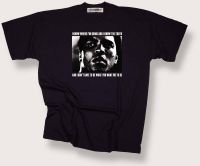
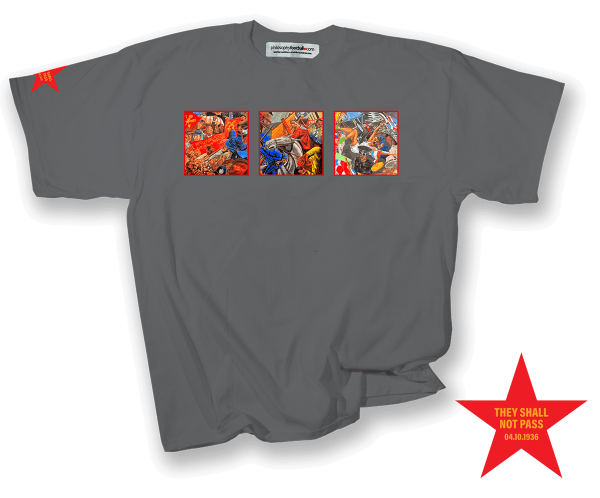
The Cable Street Mural T-shirt is available from Philosophy Football here.
Mark Perryman writes regularly on Left politics and culture, his latest book, The Starmer Symptom. He is also the co-founder of the self-styled 'sporting outfitters of intellectual distinction' AKA Philosophy Football.
Ten Books to Help Make Sense of the 2026 Labour Party Conference
26.09.26
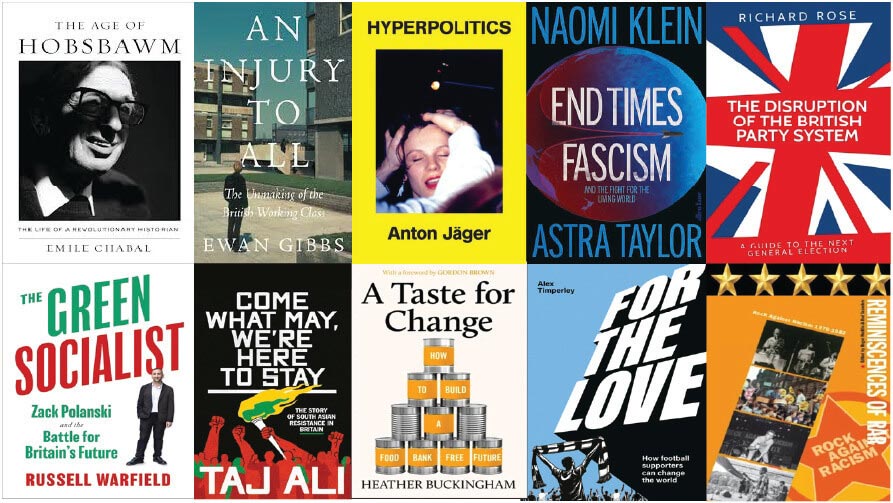
Mark Perryman makes his annual selection which this year ranges from Eric Hobsbawm to Rocking against Racism
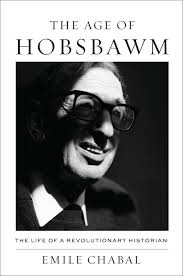
Emile Chabal The Age of Hobsbawm: The Life of a Revolutionary Historian
In the October 1983 edition of the magazine Marxism Today Eric Hobsbawm described Labour's landslide defeat in that year's General Election as Labour's Lost Millions. It was this essay, combined with Eric's September 1978 essay The Forward March of Labour Halted, also published by Marxism Today, that resulted in him being dubbed 'Neil Kinnock's favourite Marxist'. The pair of them celebrating this apparent intellectual togetherness at the 1983 Labour Conference to speak at a Fabian Society Fringe Meeting. Who would Andy Burnham choose as his intellectual best mate?
Emile Chabal's magnificent biography-which-isn't-a-biography locates the formation of Eric Hobsbawm as a thinker absolutely in his formative experiences, most notably the rise of fascism, the Popular Front and 1956. And in the process deepens our understanding of how not just Neil Kinnock, but for a broad cross-section of those seeking a way out of Labour halted and lost, found Hobsbawm such a compelling author of ideas.
The Age of Hobsbawm is available here
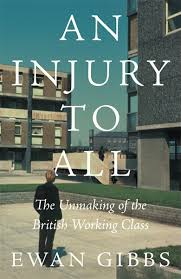
Ewan Gibbs An Injury to All: The Unmaking of the British Working Class
Class has raised the temperature of what passes for debate, on the fringe if not in the main hall where an event that still passes itself off as a 'conference' but in reality is a glorified rally addressed by Cabinet Minister after Cabinet Minister.
An avowedly conservative version of class politics was adopted by the 'Blue Labour' faction around a combination of radical economics with social conservatism. The more recent faction 'Restoration' focuses on reviving Labour as a 'working class party' defined as populist patriotic and communitarian.
Into this fray enters the labour historian Ewan Gibbs, distinctly unimpressed by how Blue/Restoration Labour seeks to close down a debate before it has barely begun, let alone made it on to the aforementioned conference floor. An Injury to All in contrast is a primer for how to combine the 'old' social forces, in particular the trade unions with both new(er) social forces, race in particular, and social subjects. The chapters on how housing and consumption have a complicated relationship with class are particularly strong.
A book that treats 'class politics' as a means to ignite debate not close it down. A most welcome change, for the better.
An Injury to All is available here
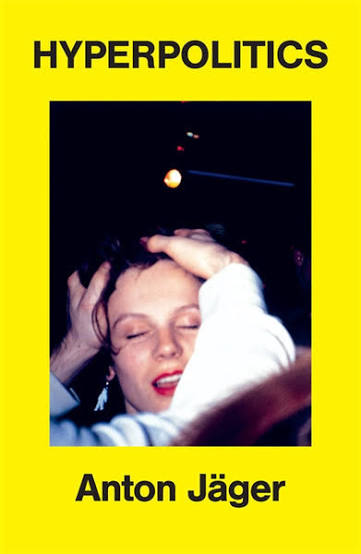
Anton Jäger HyperPolitics: Extreme Politicization Without Political Consequences
For many commentators Anton Jäger's is the most important book on politics of 2026. Will he be invited to address Labour Conference about the threat posed by 'Hyperpolitics'? You're joking. In the Corbyn era he would have been the star turn at the Labour fringe festival of ideas The World Transformed but that's packed its bags and departed Labourism for, well it isn't exactly clear where. Check the conference listings but I suspect you'll look in vain for Anton Jäger's name as a speaker. Even the more open-minded groups, the likes of Compass looking for Labour MP after Labour MP to be the fount of all wotsit. Ralph Miliband's Parliamentary Socialism anyone?
For Jäger politics is at one and the same time everywhere and nowhere. We drool over the celebrification of the news while at the same Black Lives Matter and LGBT Pride fill the streets, public figures wear their angst over Palestine on the lapels but the genocide continues its bloodied apace. Anton Jäger goes in hard on the contradictions, he finds locating the answers more complex but at least unlike too many he's having a go and will fire up his readers to have a go too. My advice to Labour Conference-goers, nip out and grab yourself a copy.
Hyperpolitics is available here
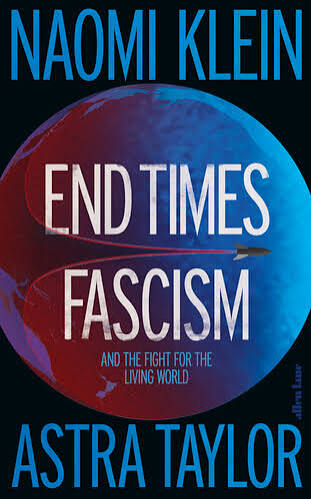
Naomi Klein and Astra Taylor End Times Fascism and the Fight for the Living World
When No Logo was published in 1999 Naomi Klein was a scarcely known author. Her ideas on the global reach and power of the 'superbrands - the likes of Coca Cola, Macdonald's, Nike - coincided with the Seattle protests against the WTO and her book almost immediately became a kind of ideological handbook for this fast-growing global movement. The 2026 Labour Conference will be the single biggest gathering of Labour members, affiliated trade unions and socialist societies this year yet at Conference the corporate presence is everywhere, 'No Logo' anyone?
With End Times Fascism Klein and co-author Astra Taylor have written a book, once more, to energise with ideas. This time the new 'popular front' urgently needed to confront and reverse a global far right, which electorally in the shape of Reform UK poses a distinct threat to tens of Labour seats at the next General Election. The spectre of Farage at Number Ten should surely be sufficient to focus minds This book is by some considerable distance the best to fill those minds with ideas not only to defeat the far right but put something better, much better, in their place.
End Times Fascism is available here
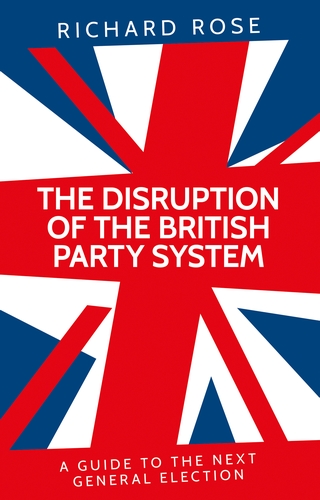
Richard Rose The Disruption of the British Party System
Unless the rumours prove correct that if Labour sees off the Zack Polanski in the Holborn and St Pancras by-election Andy Burnham may go for an early General Election to sub-title a book ' a guide to the next General Election' two and a bit years out from when its due is bold indeed, if not tempting fate too. And that's 's even when the author is ' an international pioneer in the comparative study of parties, elections and public policy' to quite the book's back cover blurb.
Nevertheless as Richard Rose explains in this extremely readable book the 'two party system' is over.
This is the insight all the self-inflated Labour hullabaloo of the 2024 'landslide'. When a government is elected on 33.7% of the vote, an (un)almighty swing to Labour of 1.6% from Corbyn's 2019 'catastrophe' this is not by any stretch of the political imagination a landslide. With Labour conference now overwhelmingly in support of Proportional Representation the poring over what a 5-party system (6 in Scotland and Wales) will be a major talking point on the conference fringe. While in the conference hall every effort will be made to keep Andy Burnham to stick to his pledge to put support for switch to Proportional Representation in the next Labour manifesto (a pledged his predecessor made and then dropped, as he did with all his pledges). This the book for all making and backing this case.
The Disruption of the British Party System is available here
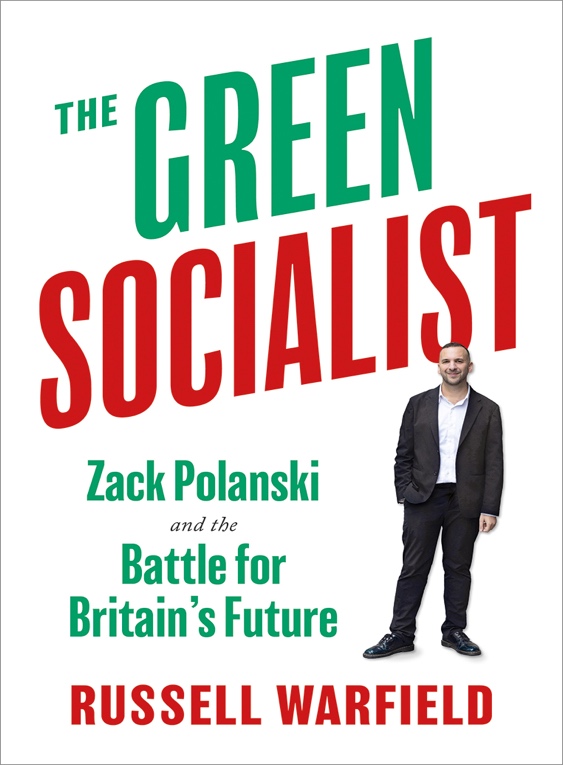
Russell Warfield The Green Socialist: Zack Polanski and the Battle for Britain's Future
Just two-and-a-bit weeks after Labour Conference finishes the party faces arguably the most important by-election since the flurry of such contests with the SDP, mostly lost in the early 1980s. A Labour win and any kind of Green Party surge will have been well and truly slowed, if not halted. A thumping Labour victory and Andy Burnham's leadership will get the kind of boost not even the obligatory Labour Conference standing ovations might provide. But make no mistake a Green Party win would be devastating. A contest Labour didn't expect, or prepare for (another of Sir Keir's pledges, made when exiting Number Ten early, was that he would see out his time as an MP until the next General Election, broken) but that is hardly a credible excuse. Zaxk Polanski's model of eco-radicalism would by given a huge, irreversible boost. I use the term 'eco-radicalism' because Rusell Warfield's otherwise very good book is misleadingly titled, however good Polanski's politics there is little to convince this is socialism. Unfettered by ideological prejudice readers can decide for themselves whether this is a good or a bad thing. Inner city seats, university town constituencies, will be there for the Greens taking. Green MPs in double figures, 30, 40, 50 or more? But Polanski won't be the next Prime Minister. So the question that Labour Conference should be discussing, and the Green Party conference a week later is the way forward being part of a broader progressive bloc versus Reform or do Greens and Labour stand entirely apart in un-coperation? This book will help all those asking this vital question to find an answer.
The Green Socialist is available here
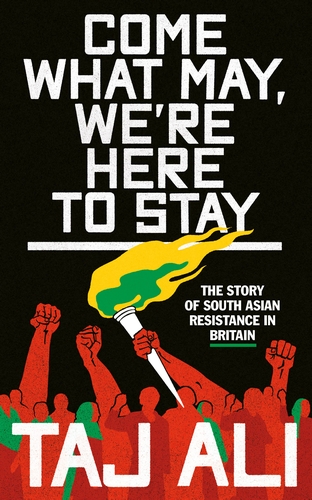
Taj Ali Come What May, We're Here To Stay: The Story of South Asian Resistance in Britain
Race has often been the most difficult of subjects for Labourism to comprehend let alone address. The battle for Labour Party sections was hard fought, led by Bernie Grant, Diane Abbott, Keith Vaz andPaul Boateng. A victory won, but the political changes it was expected to ignite? Not so easy to identify.
"If you're born and brought up in England and view it as home, what are you other than English? Denying people their Englishness or their Britishness because of the colour of their skin is a recipe for alienation and a two-tier society. How are children who hear this meant to feel?" Today such a statement is treated as almost 'revolutionary multiculturalism' rather than the good sense Rishi Sunak recently articulated. A good sense worryingly absent in Labour's perceived need to be seen to be 'tough' on borders, immigration and the right to asylum.
Taj Ali's account of what he terms 'South Asian Resistance' is a vibrant counterpoint to Labour's 'tough' talking on race. A community resisting, not content, anything but, with being talked about, instead turning their objectification, or more often demonisation, into being the subjects, instruments of change. A history lesson that has every possible purchase not only on today but any kind of future worth looking forward to.
Here to Stay is available here
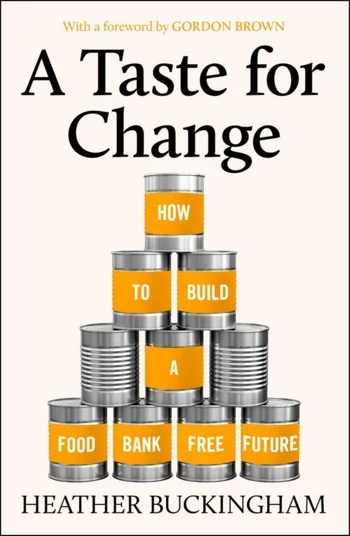
Heather Buckingham A Taste for Change: How to Build a Food Bank Free Future
If Taj Ali stylises those movements he chronicles as a 'resistance' some critics describe the single biggest response to the ravages of neoliberalism, food banks, as 'collaborators'. Surely just like Victorian workhouses and child labour they should become the stuff of history not accepted as part of our local 'amenities'? The trouble is until food poverty is abolished food banks are the only means too many communities can find to ensure none of their friends and neighbours starve.
Heather Buckingham manages to find the means to account for both 'sides' of what is in fact a false dichotomy. The fact that thousands, tens of thousands, of mainly unpaid volunteers manage to maintain such an effective network of local food banks should surely be a source of community pride. But speak to these volunteers and there are precious few who believe their efforts are anything more than a 'sticking plaster'. The means to eliminate food poverty lie with governments. This is the connection A Taste for Change seeks to make. With an estimated 26,000 delegates and visitors in Liverpool for Labour's Conference what a statement if every one of them brought an item of food (non-perishable) with them for the Liverpool food banks then gave over a conference session to be addressed not by MPs and Cabinet Ministersx but by a panel, of the city's food banks providers and users. A mad idea? Read A Taste for Change to find out why its anything but.
A Taste for Change is available here
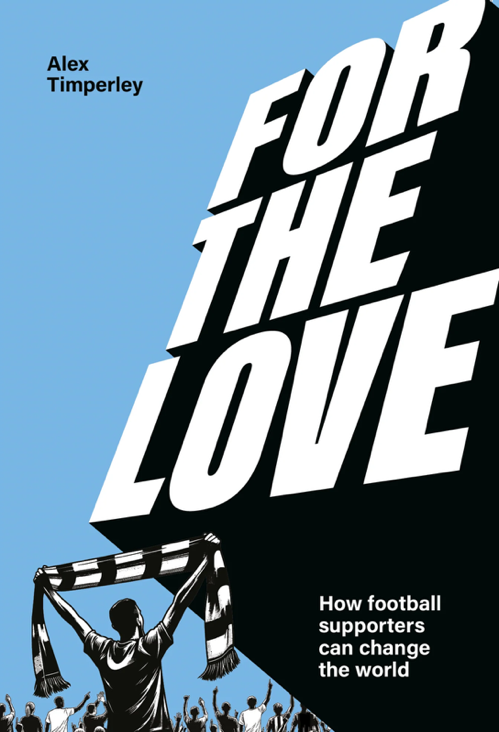
Alex Timperley For The Love: How Football Supporters Can Change the World
To include a book on football in a selection of books to understand Labour Party Conference may be drearily predictable, after all who doesn't know Andy Burnham is an Evertonian (Keir Starmer's support for Arsenal is one pledge he can't be accused of breaking Boom! Boom!). But as author Alex Timperley argues football has a unique place in 21st Century British society:
"It's pure connection, the real bone-deep joy of happiness shared communally. It's radical and it keeps us coming back. By working together and realising our shared power, we can take this radical happiness into the community and recreate that feeling in our day-to-day lives too."
OK it may be a bit strong to argue its only football that can spark this potential. Aditya Chakraborrty has suggested something similar via those Saturday morning Park Runs, others might point to the collective emotion music can generate. But Alex Timperley has impressive 'form' with football, he is the co-founder of Manchester City Fans Food Bank Support . It was in Liverpool that this extraordinary social movement, Fans Supporting Food Banks was initiated by otherwise bitter rivals Liverpool and Everton fans. If there's one book I'd recommend to understand both Labour Conference's host city and Andy Burnham as 'avatars' of a collective hope for change For The Love is it.
For the Love is available here
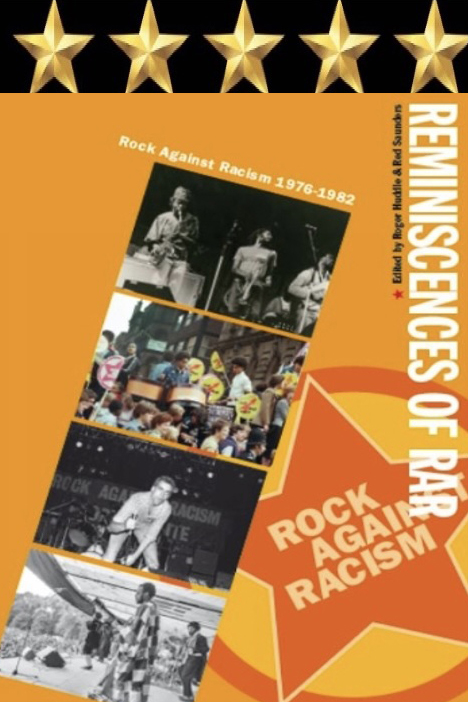
Edited by Roger Huddle & Red Saunders Reminiscences of RAR: Rock Against Racism 1976-1982
My five-gold-star choice for the book to understand Labour Conference is suitably eclectic. A read that reveals in glorious detail the absence at Conference, and in Labourism itself, of the political means and commitment to build a mass, popular movement. Does this justify the Starmerite mantra 'a party of government not protest'? No. The most famous protest in British political history, the Jarrow Hunger March, led by a Labour MP, Ellen Wilkinson. Or arguably Labour's greatest-ever Prime Minister, Clement Attlee, who risked not only his political career, but his life, visiting the British Battalion of the International Brigades on the frontline of the Spanish Civil War. Protest while never dominant has always been part of the Labour tradition
Andy Burnham is more of The Smiths generation than The Clash but he certainly understands the power of music as a platform for ideas as well as a soundtrack for life. Fifty years ago, 1976, with a tidal rise of fascism in the shape of the Nazi National Front Rock against Racism was launched. This was the era of Punk, today almost entirely remembered as rebel music yet at the time the nihilism, the swastika as a T-shirted sign of rebellion, the fashionable flirtation with nazi chic, this was a youth movement that could easily have gone in a very different and dangerous direction. The Rock against Racism manifesto ensured it didn't. " We want rebel music, street music. Music that breaks down people's fear of one another. Crisis music. Now music. Music that knows who the real enemy is." Put into practice via carnivals, tours, gigs up and down the country in cities, towns big and small, in the process bringing a new generation into a street politics required to stop the Nazis.
Today, as Labour Conference will rightly recognise the danger posed by Reform UK is different to the 1970s National Front and the 2000's British National Party yet every bit as dangerous. Add to the racist mix these so-called patriots, dressed in black their faces covered by balaclavas, and unarguably these are considerably more dangerous times. Reminiscences of RAR isn't a handbook to recreate a 50-years-ago movement. My Five Gold Star selection instead comes with this recommendation. The best possible read right now to think through what such a movement in 2026 stretching way beyond conference halls and the floor of the House of Commons might look like.
Reminiscences of RAR is available here
If you have any comments on this piece Mark would love to see them. Email him here Mark
Note No links in this review are to Amazon, if you can avoid buying books from union-busting multi-billionaires please do so.
Mark Perryman writes on left politics and culture his latest book is The Starmer Symptom apart from that he is the co-founder of the self-styled 'sporting outfitters of intellectual distinction' AKA Philosophy Football
The Letter that Rocked against Racism
05.09.26
50 years on Mark Perryman recalls the creation of Rock against Racism
I can still remember the scene. 1976-78, every Thursday morning, the sixth form common room, De Burgh Secondary School, Tadworth, Surrey. Groups, mainly boys, devouring the latest edition of the New Musical Express, or as it was known by all its readers, the NME. This was our social media, tweets in those days the sound of birds, tik tok the noise clocks made, the NME sold 250,000 copies a week, the weekly music press market big enough to support three other music titles too: Melody Maker, Sounds and the Record Mirror.
For me there was only one choice for my weekly music paper read, the NME. It reported on, championed and understood the fast-emerging punk scene, the Clash, Sex Pistols, Siouxsie and the Banshees live debuts were all in 1976. Uniquely tho' the NME combined the coverage with sharply worded rebel polemic in the shape of Julie Burchill and Tony Parsons. The pair of them rebels with a verbal cause. Or as they put it in their 96-page manifesto of the time "The Boy Looked at Johnny": The Obituary of Rock and Roll (I still have my copy, signed by Julie and Tony):
" Never mind, kid, there'll soon be another washing-machine/ spot-cream/ rock band on the market to solve all your problems and keep you quiet /off the street/distracted from the real enemy/content till the next pay-day."
A youthful punk ultra-leftism bearing little or no resemblance to what both have become, old school reactionaries.
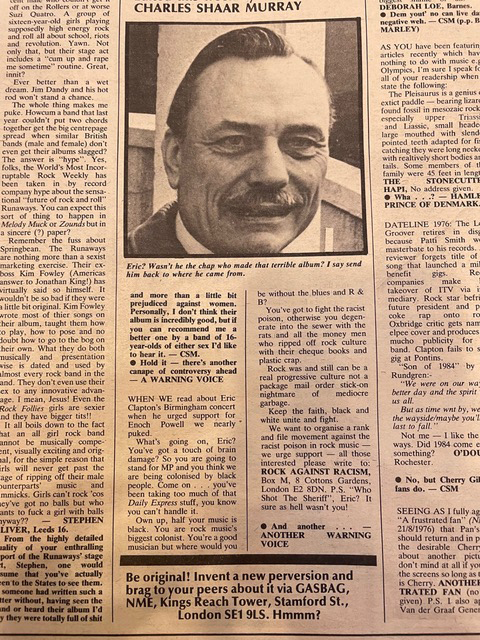
The NME 11 September 1976 issue carried a letter that captured rebel polemic precisely, this time aimed at one of the pillars of the rock establishment, Eric Clapton. In the course of his August Birmingham gig Clapton had chosen to share with his audience what he thought of the current state of Britain. In the course of what quickly turned into a diatribe he revealed himself as a supporter of the notorious racist politician Enoch Powell, a man so racist the leadership of his party, the Conservative Party, disowned him. In contrast Clapton urged the concert-goers to back Powell and stop Britain turning into a " black colony". If that wasn't bad enough he went on " get the foreigners out, get the wogs out, get the coons out." As a verbal backdrop Clapton interspersed this foul and grossly offensive tirade with repeatedly shouting into his mic the Nazi National Front slogan " Keep Britain White."
The letter brilliantly pointed out where Clapton's Rhythm and Blues came from:
"When we read about Eric Clapton’s Birmingham concert, when he urged support for Enoch Powell, we nearly puked. Come on Eric… Own up. Half your music is black. You’re rock music’s biggest colonist.... P. S. Who shot the Sheriff Eric? It sure as hell wasn’t you!”
The line 'Who Shot the Sheriff Eric? '(if readers don't get the musical reference check out here) the best of put-downs for a racist bigot using his platform to propagate more bigotry.
But the letter wasn't just about being 'anti', the classic default position of the left, but creating an alternative, something much harder but infinitely more effective and long-lasting:
"We want Rebel music, street music. Music that breaks down people’s fear of one another. Crisis music. Now music. Music that knows who the real enemy is."
Invited to sign up via a PO Box the response was both immediate and overwhelming, Rock against Racism the result. The urgent necessity in 1976 for such a movement shouldn't be underestimated.
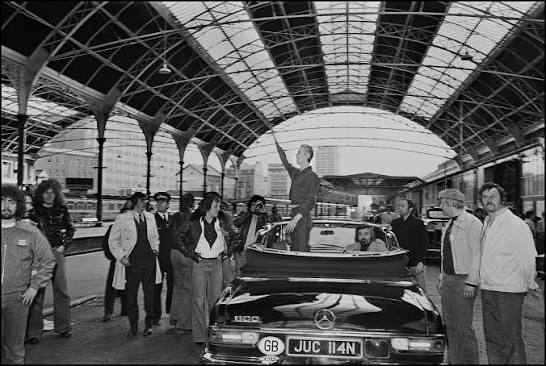
For his album released that same year Station to Station David Bowie adopted the persona of the 'Thin White Duke' whom he described, apparently approvingly, as a " very Aryan, fascist type." And in case of any doubts, Bowie in interviews promoting the album declared "Britain could benefit from a fascist leader" and championed Adolf Hitler as " one of the first rock stars" who "worked an audience". Yes Bowie, but not to get to Number One but send six million to the gas chambers and extermination. But unbowed, as a 1976 publicity stunt while promoting the album Bowie arrived at Victoria Station in a chauffeur driven open-top Mercedes, black-shirted with a salute to the waiting crowd that looked suspiciously of the Sieg Heil variety.
And while the 1976 birth of punk provided the mainstays for Rock against Racism's playlist of rebel, street, now, music there was an unhelpful habit of a mix of fashioning the swastika into shock value where two fingers, up yours was not enough with nazi chic for the punk fashion conscious. Meantime some punk bands, Sham 69 and the Angelic Upstarts in particular, despite their best efforts to shake them off attracted a far right following, while others, most notoriously Skrewdriver, went full-on fascist.
Much of punk subculture was framed by nihilism. The politics of the two-fingered salute. This coincided with rising unemployment and a resurgent racism from Powell to the National Front via Thatcher's barely coded description of the state of Britain: " if there is any fear that it might be swamped, people are going to be rather hostile to those coming in.” In that context punk's nihilism could have very easily ended with a far nastier intent than simply eff you.
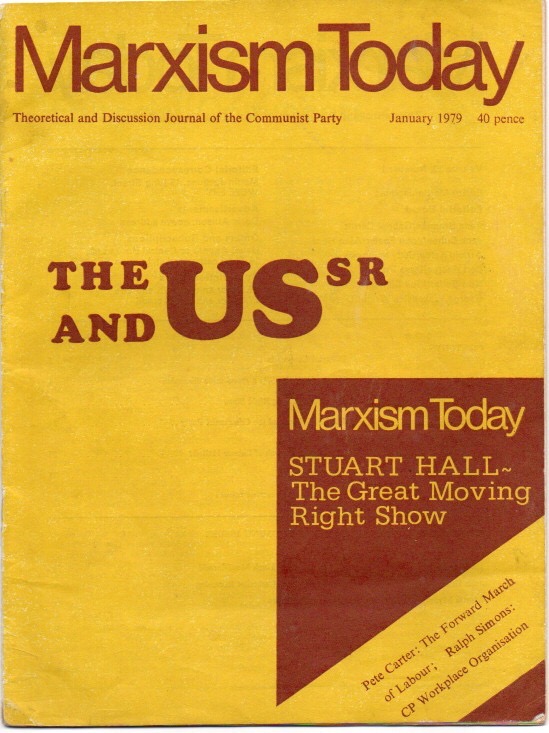
Thus Rock against Racism succeeded because it wasn't simply about the angry response sparked by one ageing rocker bigot, there was a far greater size of ambition that it embraced. It isn't a mark of failure that in 2026 we are lumbered with an unimiganable scale of far right populist racism scarcely challenged by he political mainstream. Thus, fifty years later understanding how this punky reggae politics largely succeeded, allied with one, my, generation's youthful sub-culture is needed now more than ever. In his January 1979 seminal Marxism Today essay 'The Great Moving Right Show' prefacing the Thatcherism to come Stuart Hall picked out as a sign of hope Rock against Racism "one of the timeliest and best constructed of cultural interventions, repaying serious and extended analysis." Not for the first time, hear, hear Stuart Hall.
So while joyfully celebrating Rock against Racism's 50th I'm sorry to be a party-pooper but wearing badges, or in this instance, a T-shirt, is not enough. Unless, just like the authors of that 11 September 1976 letter to the NME, we share Rock against Racism's foundational ambition to "break down people’s fear of one another." Because without that collective intent there'll be no happy ending, ever.
The Rock against Racism 50th Anniversary T-shirt is available from Philosophy Football here

Mark Perryman is co-founder of Philosophy Football and contributor to Reminscences of RAR : Rocking against Racism 1976-82
Does the Bin of History Beckon?
01.08.26
Mark Perryman examines the prospects for Farage vs Binface
Is a self-styled aristocrat with a dustbin for his head the stuff of Nigel Farage's worst political nightmare? There's plenty who would like to think so, but the only ones who can make Farage's nightmare, our dream, come true are the voters of Clacton-on-Sea come polling day, Thursday 13 August.
The Reform Party leader, or more correctly, sole owner, had planned the by-election as rebel with a cause vs the political establishment, or more accurately everyone else. As allegations mounted of multi-million-pound donations which seemed destined for his back pocket Farage played the victim while declaring in classic populist style 'let the people' decide, in his favour, naturally.
But in an avalanche of cross-party co-operation Labour, Tories, Lib-Dems, Greens all declared Farage's manoeuvre as nothing more than a stunt to draw attention away from the far more important matter of the donations never having been declared. Even Farage's deadliest political rival, Rupert Lowe MP, formerly of Reform now striking out on his own with the Restore Britain party and chipping away at Reform support from the right, joined the boycott.
So, can Binface do it, finish off Farage's political career?
On the surface it doesn't look impossible. In 2024 Farage had an 8500 majority. Not a marginal, but not exactly safe either. His vote 21,225, add up all the parties' votes from 2024 not standing, total 24,219. Easy-peasy? Yes, but by far the biggest chunk are Tory voters, 12,820, and presumably the least likely to get the joke and vote for a dustbin vs a man who they politically agree with more than most.
To counter such despondency, we get into the realm of speculation. Turnout in Clacton at the General Election was 58%. A by-election in mid-August won't be anywhere near that. Makerfield was, with the 'Burnham Bounce' 58.8%, Gorton and Denton 47.6%, considerably less so.
Clacton has had to endure Farage for a bit over two years now as their representative. Local reports characterise him as not a good constituency MP, a place that has the feel of 'off the map' resenting his grandstanding for himself not them. But would a bin do any better?
The hope is that the temptation to put two fingers up to Farage's self-centred political ambition with the most dramatic by-election result ever will override all other considerations and reservations. Maybe, but hopes aren't exactly high.
However for Farage this remains a lose-lose campaign. He had counted on humiliating his sworn enemy, the 'political establishment.' Instead, as in Rachel Reeves' immortal words when signing off Farage's resignation as an MP to trigger the by-election: "If he wants to spend the summer arguing with a bin, I won't stop him." In a contest of Farage vs Binface, there's only one winner, and it isn't Nigel. Add the very strong possibility of a reduced majority and not only humiliation but even worse for a man with the size of inflated ego Farage possesses, endless ridicule. You lost votes to a dustbin, really?!
Yet behind all the joking around at Farage's expense there's a serious political point to be made.
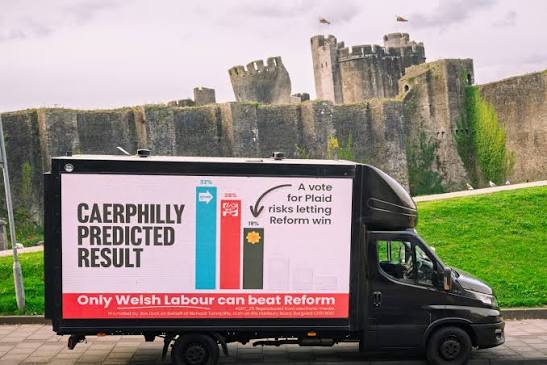
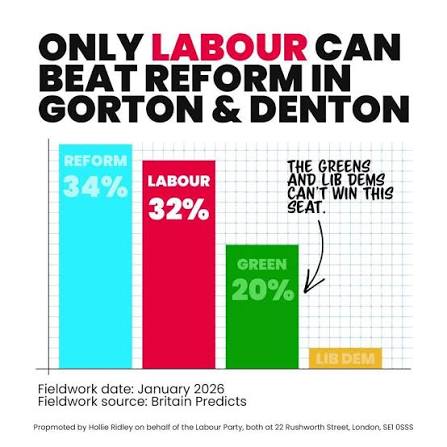
Official Labour Party eve-of-vote campaign materials
Reform lost the Makerfield, Gorton and Denton by-elections and the Caerphilly Welsh Parliament by-election. All three Labour defences of previously Labour safe seats. The three seats won by three different parties: Plaid Cymru, Greens and Labour. In both Caerphilly and Gorton Labour made entirely spurious claims, right up to polling day, that 'Only Labour can beat Reform here'. This wasn't an error, the Labour canvassing returns would have provided the campaign with the real picture, to make such false claims isn't just demeaning with a Reform defeat at stake, it's dangerous. Yes, yes, other parties do the same. Doesn't make it right.
Starmer's Labour ' landslide 'in 2024, y'know the one based on a 33.7% share of the vote, just 1.6% more than Corbyn's Labour vote share in 2019, 6.3% downon Corbyn's in 2017, was of course anything but. Instead, it was a highly disciplined campaign to bypass 'non-battleground seats' that Labour couldn't win but the Lib Dems could, with the Lib Dems returning the favour in Labour targets they couldn't win. Add Reform actively contesting every Tory-held seat whereas in 2019 its predecessor the Brexit Party stood down in every Tory seat but contested all Labour seats. Landslide? Or Tactical win?
Binface victory or no Binface victory in Clacton, the likelihood remains Reform will be a serious challenger at the 2029 General Election. Yet the chances of an electoral pact to stop Farage are next to zero. And a resurgent left-leaning Green Party threatening to take Labour seats further complicates matters. Nevertheless, a non-battleground seats operation remains the most likely way to stop Reform.
Reform's Top 50 target seats (see here) consist of an almost equal split: 27 Labour, 23 Tory. In almost every case a 'non-campaign' by those opposition parties destined to finish third or worse in these seats would seriously reduce Reform's chances of winning these first 50 seats. Allied with a well-organised and independent tactical voting campaign, if this combo can work in Reform's top target seats the impact will be multiplied many times over in those further down the list it needs to win and, deep breath, form the next government.
Either that, or we leave it to Binface to mop up the mess.
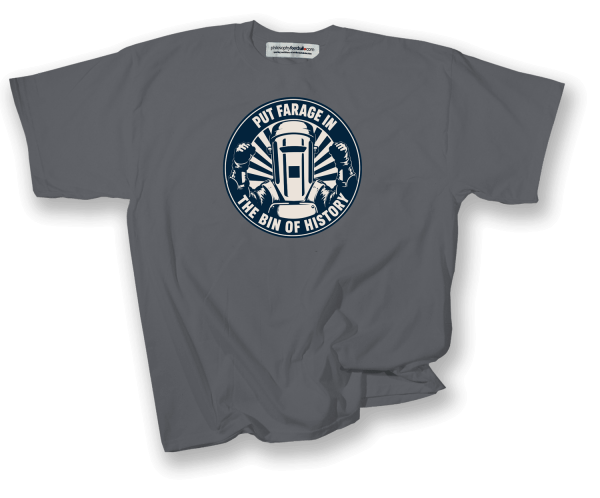
Just £9.95 'Put Farage in the Dustbin of History' T-shirt is available from Philosophy Football here.
Mark Perryman is the co-founder of the self-styled 'sporting outfitters of intellectual distinction' AKA Philosophy Football
¡ Viva Ejercito Popular!
18.7.26
Mark Perryman looks backwards, and forwards, from the day the Spanish Civil War broke out
90 years ago, 17th July 1936, the mutinous General Franco launched his coup, with the substantial numbers of the Spanish army he commanded, to overthrow the elected Spanish government. Franco was almost immediately backed by his fascist co-thinkers, Hitler and Mussolini, with decisive military support to follow.
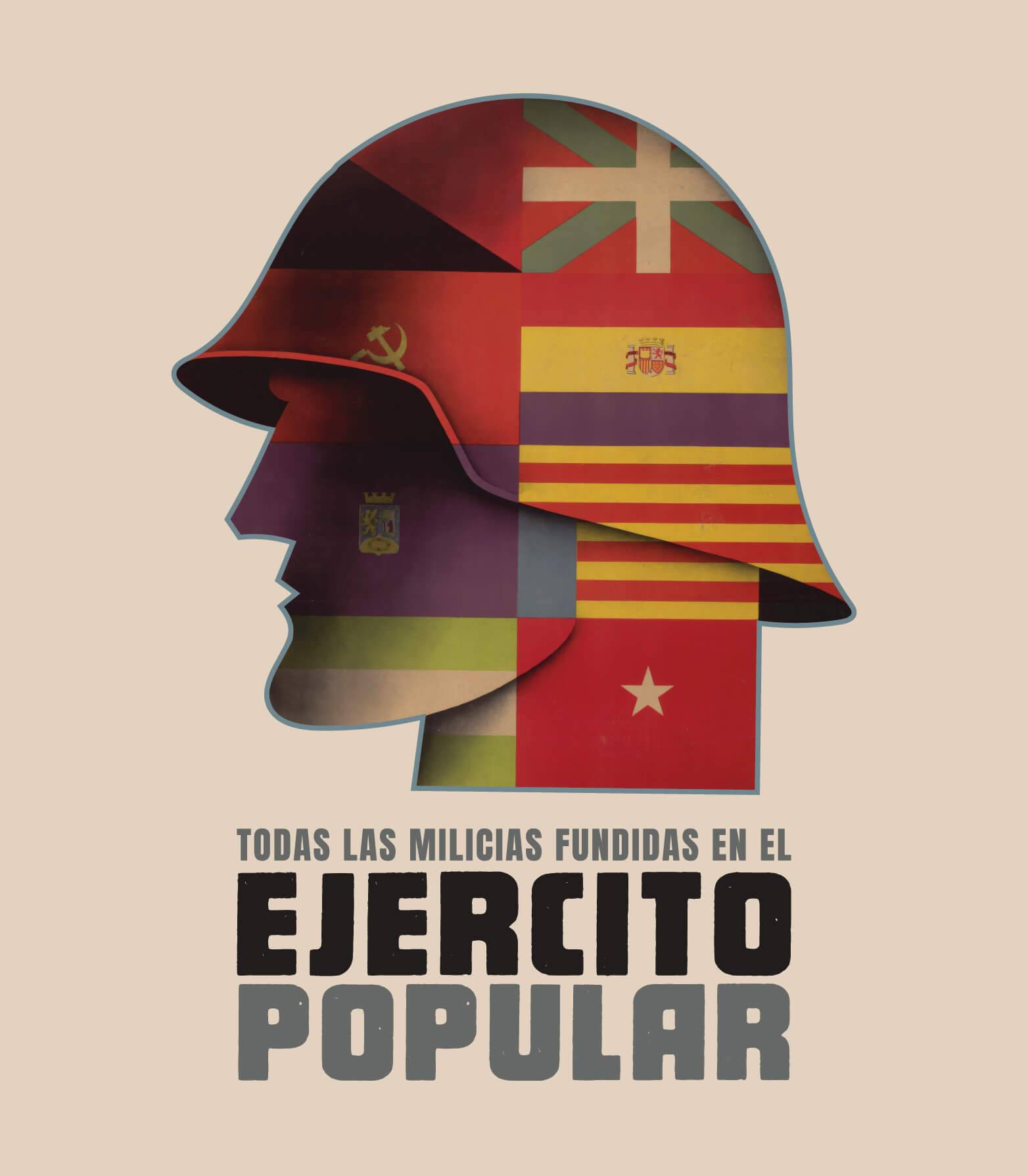
1936 was the height of a politics known as the 'Popular Front', uniting whoever was against fascism, all those involved willingly putting their own politics aside for the single cause of stopping the march to power of fascists right across Europe. The recruitment poster for the Ejercito Popular was emblematic of this. Ejercito Popular, a 'people's army.' Todas las milicias fundidas en el Ejército Popular, 'all militias merged into the people's army.'
This wasn't simply a political unity, the Popular Front was deeply rooted in popular culture too. 1936 was also the year of the Berlin Olympics, the Nazi Olympics, presided over by Hitler, on the eve of the holocaust the International Olympic Movement in full collaborative mode. Meanwhile in Barcelona the ' People's Olympics' was taking place. The Spanish Republican government had refused to send a team to Berlin Olympics which they correctly surmised would be used to sanitise and propagandise the Nazi regime. Instead, they organised a 'People's Olympics' in Barcelona which 6,000 athletes joined from across the world. The day before the opening ceremony Franco launched his murderous attack on the Republic to start the Spanish Civil War. The Barcelona Games were cancelled; the athletes were forced to leave but some chose not to return home but to join the International Brigades in their battle for Spain's land and freedom. Sport, popular culture, recognised and mobilised by the Popular Front as resistance.
Within months, and without the communicative aid of television news let alone the internet and social media, the stuff then not even the wildest imaginings of science fiction had dreamt up, Spain became the global epicentre of the Popular Front. The Ejercito Popular joined by the International Brigades, volunteers making their way from across Europe, America, Canada, Australasia. Invaluable reinforcements yet like the Spanish volunteers mostly with little or no military experience. It is hard to imagine now the extraordinary act of courage involved in taking up arms to fight the trained army Franco had at his disposal. An act of bravery framed by political commitment or desperation, or both.
Add to this the significant and sophisticated support for Franco provided by Hitler and Mussolini. Guernica 1937 a bloodied dress rehearsal for the blitz the Luftwaffe would inflict on London and other English cities just three years later 1940-41. Picasso's painting of what Guernica suffered is the most powerful painting imnaginable of the devestating consequences the inhabitants of the city suffered. But for Picasso this wasn't simply about 'great art' but framed by his own politics: "Painting is not done to decorate apartments. It is an instrument of war." Art at war, with war. The Popular Front a Cultural Front too, not as an added extra but theorised and practiced as a central part of 'doing' politics.
In this regard it is entirely fitting to mark the 90th of the Spamish Civil War via an artful recruitment poster for the Ejercito Popular designed by Emetrio Melenderas, a Spanish graphic artist who produced posters for the Republican cause during the Civil War. Menderas like many artists, poets, musicians, writers and more, put his art at the disposal of the Popular Front, not in an instrumental way but to add another dimension to the resistance. Ejercito Popular, his most famous work neatly comprises the breadth of the Popular Front, from Communists and Anarchists via Basque and Catalan separatists to Spanish republican nationalists. For once, together as one, on a helmet, worn to save lives whatever their differing beliefs. In later work during the civil war Melenderas used his artistry to celebrate the Popular Front unity of nationalism and internationalism when in October 1936 the International Brigades were formed to join Spain's battle to defeat Franco's insurgency. And again, the breadth of this resistance reflected in his ¡Movilizacion! poster beautifully capturing a desperate need, to recruit women for a vital part of the resistance as farmers to grow and harvest the crops would feed the Republic. A vital effort repeated just a few years in Second World War-torn Britain with the Women's Land Army.
Didactic, instrumentalist, purpose-driven, yes, such art was all of those things. But at one and the same time of the highest imaginable quality, beautiful on its own terms not anyone else's, drawn, painted, produced for the cause in its own unique way not to serve as a necessary add-on. Such a dialectic, for want of a better word, all too rare in the political culture of then, and now. In a word, or three to be precise, it shouldn't be. ¡ Viva Emetrio Melenderas! ¡ Viva Ejercito Popular!
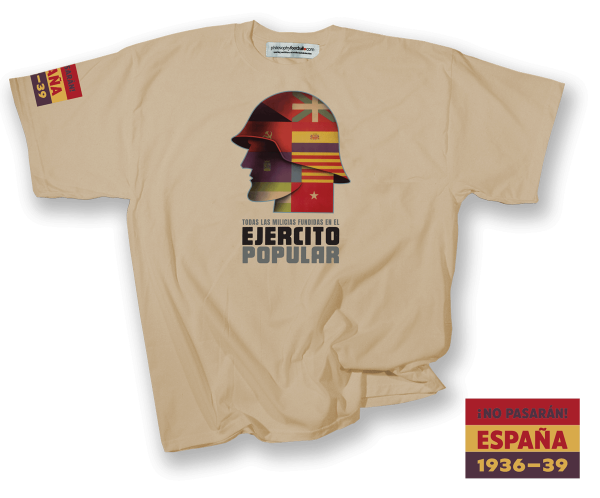
Ejercito Popular T-shirt is available from here
Mark Perryman is the co-founder of the self-styled 'sporting outfitters of intellectual distinction' AKA Philosophy Football
ten books that shook the world cup
04.07.26
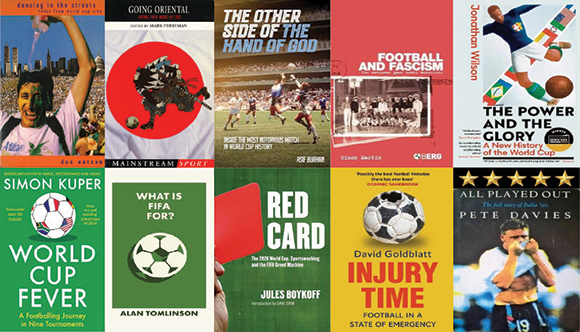
Philosophy Football's Mark Perryman recommends ten reads that reveal the tournament at its best, and worst.
After three weeks the World Cup finally gets down to the serious business. The starting 48 teams whittled down to the last 16. Win or go home. Yet the 'serious business' of a World Cup for the best part of a century has from the beginning, Uruguay 1930, always stretched way beyond the touchline. The only truly global sporting event, the Olympics don't even come close. To mobilise the passions, partisanship and shared community of a worldwide fan base. Uniquely combining both a popular nationalism and popular internationalism politicians and activists struggle to comprehend. The joyfulness of the tournament more often than not surviving in spite of, not because of, FIFA, the multinational sponsors, host nation political leadership. The World Cup that if we look carefully enough shakes the world.
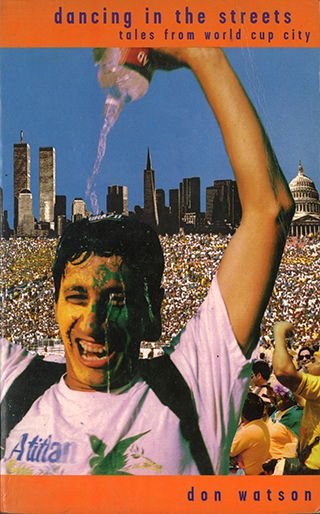
Dancing in the Streets: Tales from a World Cup City Don Watson
The last time the USA was a World Cup host it was on its own and England had failed to qualify. All the joy of Italia '90 and England's barnstorming run to the semis came to naught with Graham Taylor's mishap strewn management. Meanwhile 1966 World Cup winner Jack Charlton who had been snobbishly overlooked as England manager because he didn't quite fit what the FA thought the holder of the post should look, sound, behave took the Republic of Ireland to their second successive tournament, USA '94.
Don Watson, previously best known as a music writer on the 1980s weekly must-read the New Musical Express in '94 turned his hand to football to write a book that not only captures the unique experience of following your nation to a World Cup. For Scotland 2026, read Ireland 1994, But also how this hopelessly and joyfully intersects with the globalism of both the host nation and fellow World Cup competing nations. Of course we can get a flavour of this via the media coverage but nothing like the experience itself. With Dancing in the Streets Don captured this brilliantly and along the way both coins and develops the term 'World Cup City.' My dog-eared copy was what helped convince me to be there the next time, France '98.
Available from second-hand copies at Abe Books here
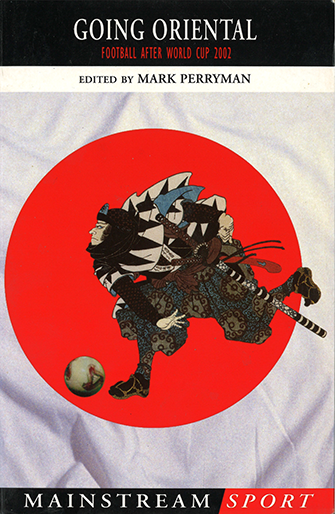
Going Oriental: Football after World Cup 2002 Mark Perryman
And you could say, just like tens, hundreds, of thousands of other England fans promptly caught the World Cup travelling bug. A bug given an injection of full-blown footballing global internationalism by England in Japan World Cup 2002, Japan. Unlike France '98 this was a country few travelling England fans had visited before and knew next to nothing about, including me.
So how to do a book? Japanese, and South Korean contributors,, my favourite footgball writers to fill in the blanks. England fans' reporting on their own experiences. Political and cultural writers to provide the broader context. England went out at the quarter-final stage so no happy ending on the pitch, but thanks to this brilliant range of contributors with Going Oriental I did my best to provide one off it.
Available fromsecondhand copies at World of Books here
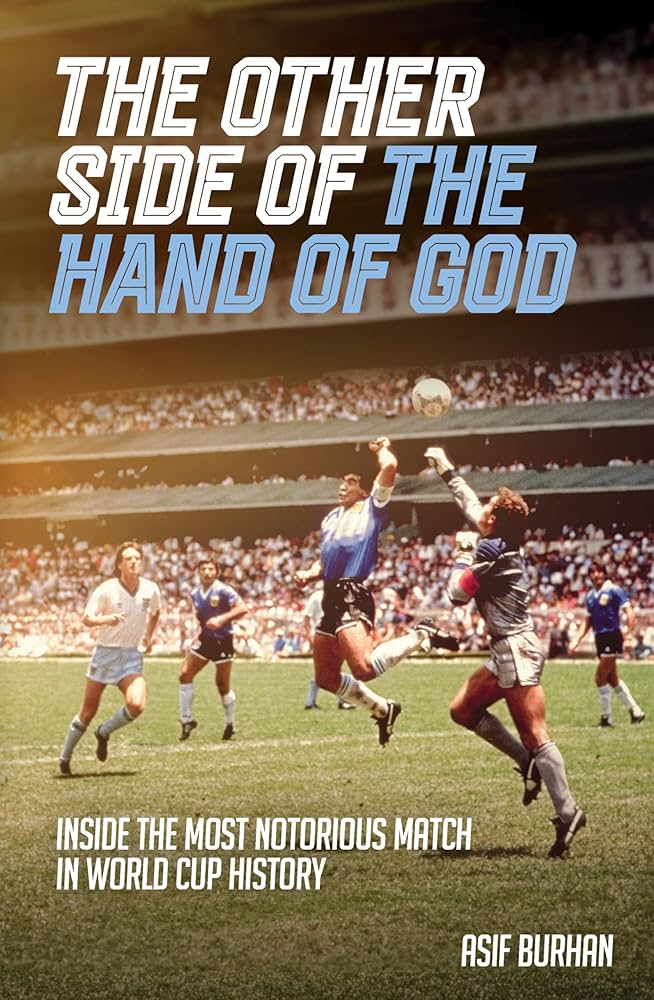
The Other Side of the Hand of God : Inside the Most Notorious Match in World Cup History Asif Burhan
Are World Cups all sweetness and light? No of course not. Any World Cup is made up of a complexity of rivalries, some the product of a history off the pitch, some down to events on the pitch, most a potent mix of a bit of both.
Mexico '86, preceded by the small, or rather, the big, matter of the 1982 Falklands/Malvinas war. An episode that, for both sides, has become hopelessly confused with events on the pitch ever since. Ahead of the Spain 1982 World Cup FIFA fixed the draw so that unless the two teams made the final they couldn't meet. Sorted, or so they thought.
Asif Burhan, whom I first met as a fellow travelling England fan, in his debut book The Other Side of the Hand of God tells in fascinating detail how the football and this short war became hopelessly mingled. Argentina, their armed forces a humiliating defeat off the pitch, only able to win on the pitch by bare-faced cheating. What's to like? Not much. Asif helps us to understand this moment in two nations' shared football history. One that can't be divorced from the contrary fact that all but the most embittered England fans would gladly, if a little grudgingly, recognise. Notwithstanding his 'hand of God' Maradona as one of the world's footballing greats.
Available from Pitch publshing here
Football and Fascism: The National Game under Mussolini Simon Martin
Sport and fascism? Oh, you mean Berlin 1936, the Nazi Olympics, the Olympic movement's co-habitation with Hitler, his infamous walkout when Jesse Owens wining four gold medals humiliates Adolf's fervent belief in the absolute superiority of his master race. A familiar enough episode for most sports fans.
Yet Mussolini's connection with Italian football is in many ways much more significant. The inaugural World Cup was held in Uruguay, 1930. The second, Italy 1934, at the height of Mussolini's power, Italy won the competition, the first European nation to do so. And at France 1938 they became the first team to win the World Cup away from home.
Mussolini unashamedly exploited these victories for their propaganda value, at home and abroad. But more than that, Italian football was reorganised under Mussolini's leadership, he created the first Italian national league, Serie A. Sounds familiar? In Rome, Turin, Bologna, Como clubs' stadiums were rebuilt, featuring Mussolini's name in their title, or a statue in his honour, or both. This was a regime that absolutely knew, and exploited, the power of football to promote fascism. Simon Martin's book reveals a history that football would rather forget. An account to leave reader feeling thankful that Trump apart from no doubt showing up to spoil the World Cup Final, unlike golf ,shows zero interest in football. A tournament in spite of his worst efforts instead has shown the power of football to unite in joy not divide with hate, or worse.
Available from secondhand copies at World of Books here
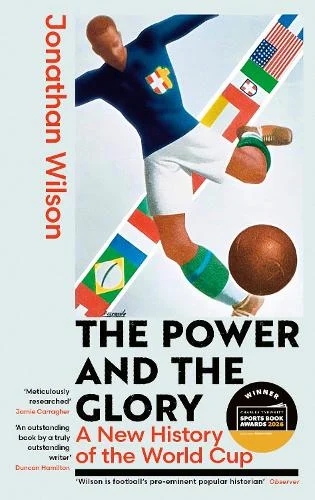
The Power and the Glory: A New History of the World Cup Jonathan Wilson
For dedicated followers of the World Cup and a certain vintage the late Brian Glanville's History of the World Cup has always been a must-read. First published in 1973 updated editions appeared in 1974, 1980, 1984, 1993, 1997, 2002, 2005, 2006, 2014 and 2018. Brian passed away in 2025.
Jonathan Wilson is perfectly placed to continue this there-or-thereabouts quadrennial tradition. A learned writer on the evolution of football tactics, a historian of the game and as founding editor of The Bllizzard steeped in football as culture. The Power and the Glory showcases Jonathan's rich mix of talent to chonicle the cultural reach every World Cup produces. Can't wait for the 2030 updated edition, yes please.
Available from Abacus Books here
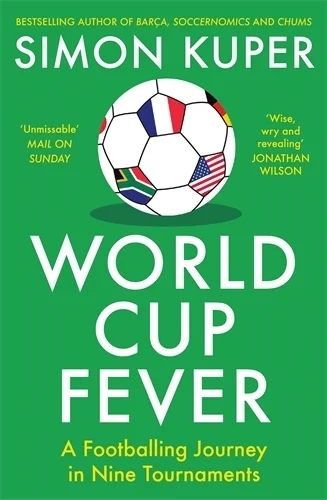
World Cup Fever: A Footballing Journey in Nine Tournaments Simon Kuper
Simon Kuper made his debut in 1994 as an author with Football against the Enemy. It won the hugely prestigious William Hill Sport Book of the Year. A kind of Fever Pitch, published two years earlier in 1992, goes global, or if you prefer, on tour. I don't mean this in a derivative way, rather Simon like Nick entirely understood how football's meaning is located in the deep-seated attachments, and sometimes antagonisms, it ignites. He's subsequently explained this via books on Ajax and Barcelona and expanded his reach to explain, with Stefan Szymanski 'Soccernomics', and further afield an English class and political system rooted in Oxbridge.
Simon combines all this to produce World Cup Fever made all the more special via his own travelling tales to World Cups 1990-2022. Four of these I've been to, 1998-2010, at one I shared a pre-match lunch with Simon, 2002, Sapporo (I think) prior to England v Argentina. By then he was travelling with media accreditation. But Simon, who's first World Cup Italia '90 he went to as an escapee student, absolutely gets what a unique experience for fans the tournament is. FIFA, governments, sponsors, do their worst to police, monetise and ruin this experience but my unforgettable World Cup tell me they never entirely succeed in their endeavours. Fans from every competing nation and the hosts have the time of their lives, in spite of. Warning, after a read of this book the irresistible inclination will be to want to join in the next time. Start saving now!
Available from Profile Books here
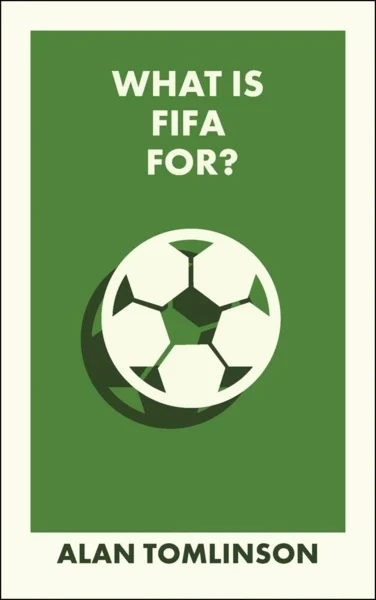
What Is FIFA For ? Alan Tomlinson
I've probably learnt more about the politics of sport from Alan Tomlinson than any other author. As a critical thinker he is simply peerless. Most, including me, would answer the question, 'What is FIFA for?' With two words. Eff all. Fair enough. An explosion of anger at FIFA's purposeful ineptitude is entirely justified. Alan's short book perfectly captures the deep-rooted rooted reason why so much of what FIFA does is wrong: clientelism which inevitably breeds a rush for revenue generation at any cost to fund and corrupt practices to service. But at the same time football is by some considerable distance the most global of sports. It functions as such thanks to FIFA, so credit, where credit is due, is properly recorded to balance the critique of FIFA with appreciative understanding of its much understated role.
Available from Bristol University Press here
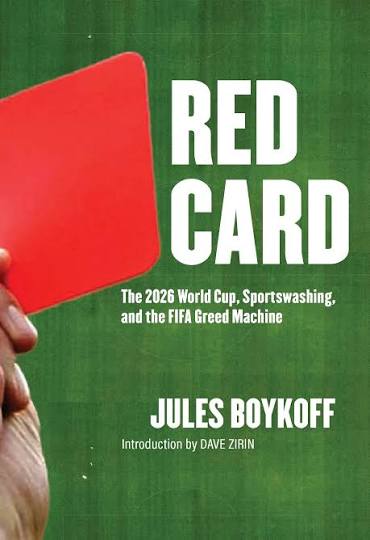
Red Card: The 2026 World Cup, Sportswashing and the FIFA Greed Machine Jules Boykoff
Jules Boykoff 's critique of World Cup 2026 is unashamedly agitational, an adjective I use entirely positively. A former international footballer, academic and campaigner, the anger leaps off the page to drive the reader on from one murky episode of World Cup 'sportswashing' to the next. If there was a 'man of the match' award for sportswashing there is little doubt Jules would dishonour Infantino with it, job done. But the difficulty remains, once the games kick off the joy of the spectacle takes over. The answer Jules provides is much like a match:
"We're living a pick-a-side moment in history when one must choose democracy or authoritarianism. If someone refuses to choose, then in reality, they have chosen. To that battle, I say game on."
Off the pitch, in the land of Trump, or indeed Farage, such a binary opposition is understandable. but with football the lines are blurred. The global carnival of joy a World Cup produces isn't 'false consciousness' rather its is very a welcome break from all the world throws at us the rest of the time. How to make that connection critical as well as joyful? The answer lies in a quote Jules opens his book with from Stuart Hall, the political theorist not the disgraced former TV commentator:
"Politics does not reflect majorities, it constructs them."
1-0 to Hegemony United.
Available from OR Books here
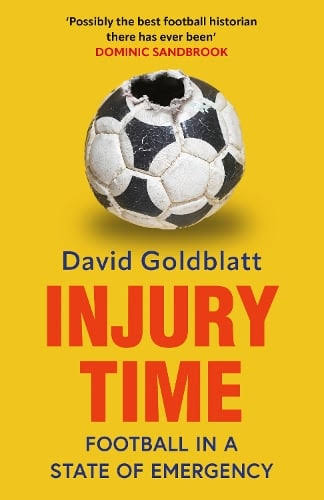
Injury Time: Football in a State of Emergency David Goldblatt
Of course, World Cup 2026 doesn't stand in (un)splendid isolation. The kind of critique Alan Tomlinson and Jules Boykoff provide of FIFA and the tournament come mid-August will be just as necessary to apply to the domestic game. There's no one better to provide precisely this than David Goldblatt.
David excels as a writer by combining both a counter-history of football with identitying an alternative present to the one we've been lumbered with. While at the same time providing a detailed understanding of the system that has produced the state football is in.
His most extraordinary achievement? None of this leaves the reader depressed, instead intellectually armed with the belief that another football is possible, if right now implausible.
Injury Time ranges far and wide, choose to dip into chapters for insights into how football frames Europe, economics, racism, national identity, the climate crisis. Or reverse the process, how Brexit, the decline of authority, nationalism, covid, the changing geography of club ownership frame football. Either way, or a mix of both, once World Cup 2026 is over this is a book to focus minds and hopes for season 2026-27. That's if England haven't won the trophy, in that eventuality all critical thought might need to take a gloriously-earned rest
Available from Mudlark here
FIVE STAR BOOK CHOICE
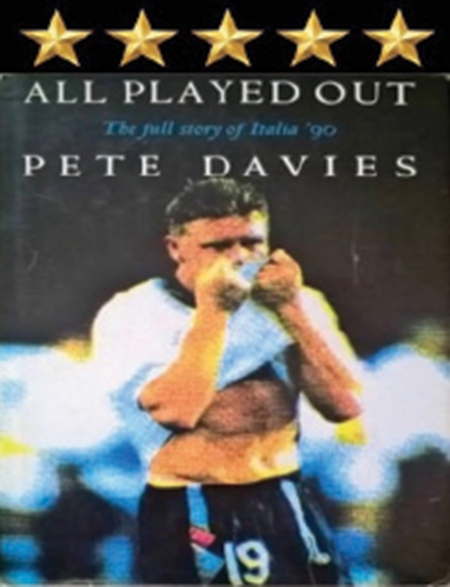
All Played Out: The Full Story of Italia '90 Pete Davies
For my Five Gold Star choice of a book to shake the World Cup I've gone all the way back to Italia '90. In one beautifully crafted sentence author Pete Davies summed up precisely the meaning of that, this, any World Cup.
" Planet Football - it's a place where the simple dreams of boys kicking a ball between coats on the ground are force-nurtured, under floodlights and cameras, to the most mutant and enormous dimensions."
Pete's book, was his first book on football, a novelist he came to Italia 90 afresh, and left it bewitched. Italy, Bobby Robson, Gazzamania. Lineker, missed penalties, he gloriously captures the lot. It is no criticism to note that swiftly following the success of the tournament 'Planet Football' became 'Mod£rn Football', in 1992 both the Premier League and the Champions (and rich runners' ups) League were founded. The rest is history.
But before all that All Played Out describes a World Cup at its very best. When I set out to edit a collection The Ingerland Factor: Home Truths from Football about the first World Cup I travelled to, France '98, I was chuffed to bits Pete agreed to contribute a chapter. And again for my World Cup 2002 collection. Never mind my own modest efforts, those two chapters of Pete's are the finest ever achievement of my football books. If you haven't read it grab yourself a copy of All Played Out and you'll understand why.
Available from secondhand at Abe Books here
Note No links in this review are to Amazon, if you can avoid boosting the obscene wealth of tax-dodging billionaires please do.
Mark Perryman is the co-founder of the self-styled 'sporting outfitters of intellectual distinction' AKA Philosophy Football
Neither Trump nor Infantino but International Footballism
13.06.26

Philosophy Football's Mark Perryman explains how despite the worst efforts of FIFA and the White House three hats symbolise what remains of a fans World Cup
I am not now, nor have I ever been, a member of the Socialist Workers Party. Or their more free-thinking predecessors the International Socialists. But I've always had a sneaking regard for their slogan "Neither Washington nor Moscow but International Socialism" first coined by the International Socialists at the height of the Korean War. Why? Because in just seven words it decries loyalty to either of two brutish behemoths in the cause of something better. Hence my adaptation to reflect my feelings about Trump, Infantino and World Cup 2026. For they are doing everything possible to monetise out of existence the popular internationalism a World Cup produces and in turn robbing this and future World Cups of precisely what makes the tournament so uniquely special as a sporting event. Or to mobilise another far-left quote in my critical cause, Karl (Marx) himself: "All that is solid melts into air, all that is holy is profaned."
A football World Cup holy? Isn't that putting it a bit strongly? But the scale of football's importance is there's nothing as global as football. The English language? Yes, spoken as a second language worldwide but mostly by social elites. The rules of science and mathematics, shared only by specialist professions. Middle and long-distance running, yes, a global sport but one that doesn't have a popular following outside of the Olympics. Professional boxing, a global sport too yet World Champions who attract a global fan base few and far between, Muhammad Ali the obvious exception, not the rule.
It's 'International Footballism' which makes football, and since 1930 a World Cup, unique as a sporting, indeed cultural event. Football, apart from the blessed offside rule, a game of the simplest possible rules, a spherical object to cross a line between two vertical objects and below a horizonal bar. There is not a continent on earth where the game isn't played. Professional leagues attract a global audience and fanbase. European domestic league club teams made up of umpteen nationalities. And every four years all of this brought together for a World Cup.
This is what Infantino and Trump, if we're generous, simply don't understand, but ignorance is no excuse for the mendacious threat that together they pose.
Of course, Infantino, like previous FIFA Presidents Havelange, and Blatter, speaks the language of the global game and its international inequalities with Europe and South American interests dominant. Havelange won the vote and ousted Sir Stanley Rous in 1974 largely on the promise to give better representation and support to the fast-emerging African and Asian football nations. Rous in contrast was both a post-war administrator still in imperial mould and dogged opponent of FIFA banning Apartheid South Africa from international football. But any principled solidarity first Havelange, then Blatter and now Infantino might have once possessed soon enough turned into a politics of transaction, ensuring FIFA Presidents bought a bloc of support via patronage that made their position of absolute power impregnable.
And a World Cup should be globally representative. Its growth reflects this from 13 at the first tournament Uruguay 1930, 16 teams from 1taly 1934 to Argentina 1978, then 24 teams from Spain 1982 to USA 1994 and 32 teams France 1998 to Qatar 2022, and now 48 at World Cup 2026.
In 2013 Sepp Blatter set out the reason for tripling the size of the tournament from its early days: "! would like to see globalisation finally taken seriously, and the African and Asian nations accorded the status they deserve at the FIFA World Cup. It cannot be right that the European and South American confederations lay claim to the majority of the places at the World Cup."
However compromised Blatter's intentions few would disagree with the sentiments. Yet European and South American domination of the tournament has barely changed. Morocco in 2022 finally becoming the first African nation to reach the semi-final stage, following South Korea becoming the first, and to date only, Asian nation to do so in 2022. Whatever the basis of Blatter's and now Infantino's intentions it is absolutely the case that competitive sport isn't a representative democracy.
Pretending that it is means World Cup 2026 will be lumbered with a full month of scarcely meaningful games until the quarter-finals take place. There might be the odd upset along the way but the chances of any of the countries filling those 16 extra places featuring amongst the eight teams in the Quarters are very long indeed and scarcely any shorter for the last 16 a few days earlier. Continental competitions, the African Cup of Nations, the Asian Cup in particular, are key to the globalisation of football. The dogged resistance of the European leagues releasing players for these tournaments the polar opposite to what should be football's global solidarity. Following the Arab Cup model by expanding the number of sub-regional competitions would further extend the participation in international tournaments of nations less likely to make it to a World Cup. Closer to home reinstating the Home Nations tournament for England, Northern Ireland, Scotland and Wales would help make up for when the latter three fail in their World Cup qualifying campaigns (ouch!).
All previous World Cups have been defined as much by the host nation as the action on the pitch. This is almost as true for those watching at home as the travelling fans. It was Euro 96 that turned me into a travelling England fan. But despite attending all of England's games it was being taken by a mate to Italy v Germany at Old Trafford that convinced me. The streets and pubs surrounding the stadium packed with German and Italian fans. The Germans mainly travelling fans, the Italians mainly second and third generation migrants, one group with their huge banner ' The Azzurri from Norwich greet the Azzurri'. A popular internationalism. And so it proved. France '98, the Danish fans joyfully partying the night away on a Nantes campsite despite just being at the wrong end of a 3-2 against Brazil which meant the next morning they'd be homeward bound. Japan 2002, where countless Japanese wore England shirts with 'Beckham 7' on the back, us England fans loved not as had been more usually the custom loathed. Germany 2006, hearing the guilty admission of so many England fans that as the Germans seemed to like us wasn't it about time we stopped hating them? South Africa 2010, a country I'd spent my twentysomething years protesting against and here I am at a huge party in Soweto watching South Africa's opening match on a big screen. Framed by the host nation, practiced by fans worldwide, home or away, this is a popular internationalism writ large by what both unites and divides us, football. And to date there's never anything quite like it.
An expansion of dubious purpose and doubtful positive consequences for the so-called beneficiaries threatens to destroy this. The number of countries of sufficient size with the stadia and infrastructure to host a 48-team tournament are very small indeed, and that assumes any of these precious few have any interest in doing so. A World Cup host nation is a very special responsibility, both awarding that privilege and carrying it out. We will see in future World Cups split across two, three or more host nations. Canada and Mexico will no doubt do their best but in reality will be bit part players, to Trump's USA, leaving their citizens to ask what's the point, why did we bother, how much did that lot cost. Japan and South Korea were the first, and to date, last Asian nations to host a World Cup, if FIFA was truly committed to a global game rather than one dominated by Europe and South America it would be doing everything possible to persuade China and India to be future hosts. Morocco will co-host the 2030 World Cup with Spain and Portugal. Good, but again it's a bit-part, this time in the centenary World Cup. A tournament which if FIFA had any understanding of its own history deserves to be where it all began, in 1930, the first World Cup, Uruguay. Not a very commercial proposition so the money spoke and one hundred years of World Cups swiftly dumped by for financial reasons. .
Neither Trump nor Infantino? Not all that is rotten in how we arrived here can be dumped on them, but enough can to make them more responsible than most. Trump's politics are about both monetising everything he can get America's hands on and demonising anyone he chooses to disagree with armed with the most destructive forces available. His exclusion of a world class referee simply because he came from Somalia emblematic of a President only too ready to be at war with the rest of the world. He will self-evidently use the tournament explicitly to his own political purposes and never mind the consequences for what many of us still, if a little romantically, cherish as the global people's game. FIFA has for some considerable time proved an inadequate defender of any such version of our game. But making it as difficult as possible, in many cases impossible, Trump doesn't like the ideological, look of, opening up the tournament to ticket pricing based on the very most anyone is willing to pay, while at the same time removing the kind of help for fans, including cheap transport and accommodation options previous tournaments have provided the message is clear. High-priced ticket holders welcome, the rest, get used to it. Oh, and if you complain too loudly, Infantino's response? Quit moaning.
Neither Trump nor Infantino, most certainly. But, despite every one of their mis-steps becoming more evident and their self-serving attempts to grab a portion of the World Cup's reflected glory fans whether at the World Cup or watching worldwide will treat them with the contempt they deserve, good. And we'll do this by celebrating with Americans, Canadians, Mexicans what we share, our love of football. For six weeks only, a bobble hat replaced by a Stetson, a Sombrero and the unique headgear of a Canadian mountie. Hats off, or rather on, for International Footballism because with it another World Cup is always possible.
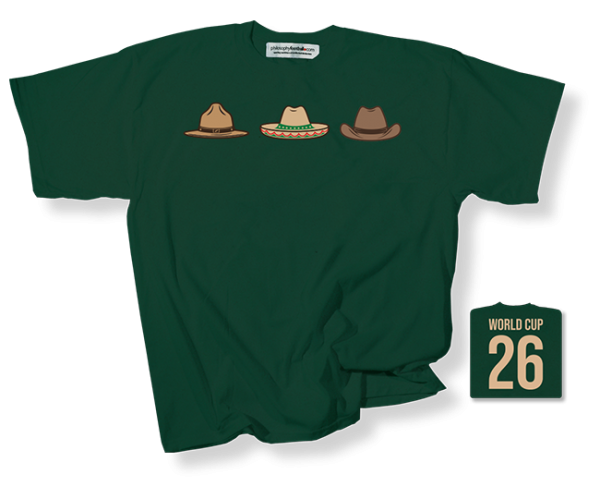
Three Hats World Cup 2026 T-shirt is available from Philosophy Football here
Mark Perryman is the co-founder of the self-styled 'sporting outfitters of intellectual distinction., aka Philosophy Football.
Have you noticed how we only win the World Cup under a Labour Government
06.06.26
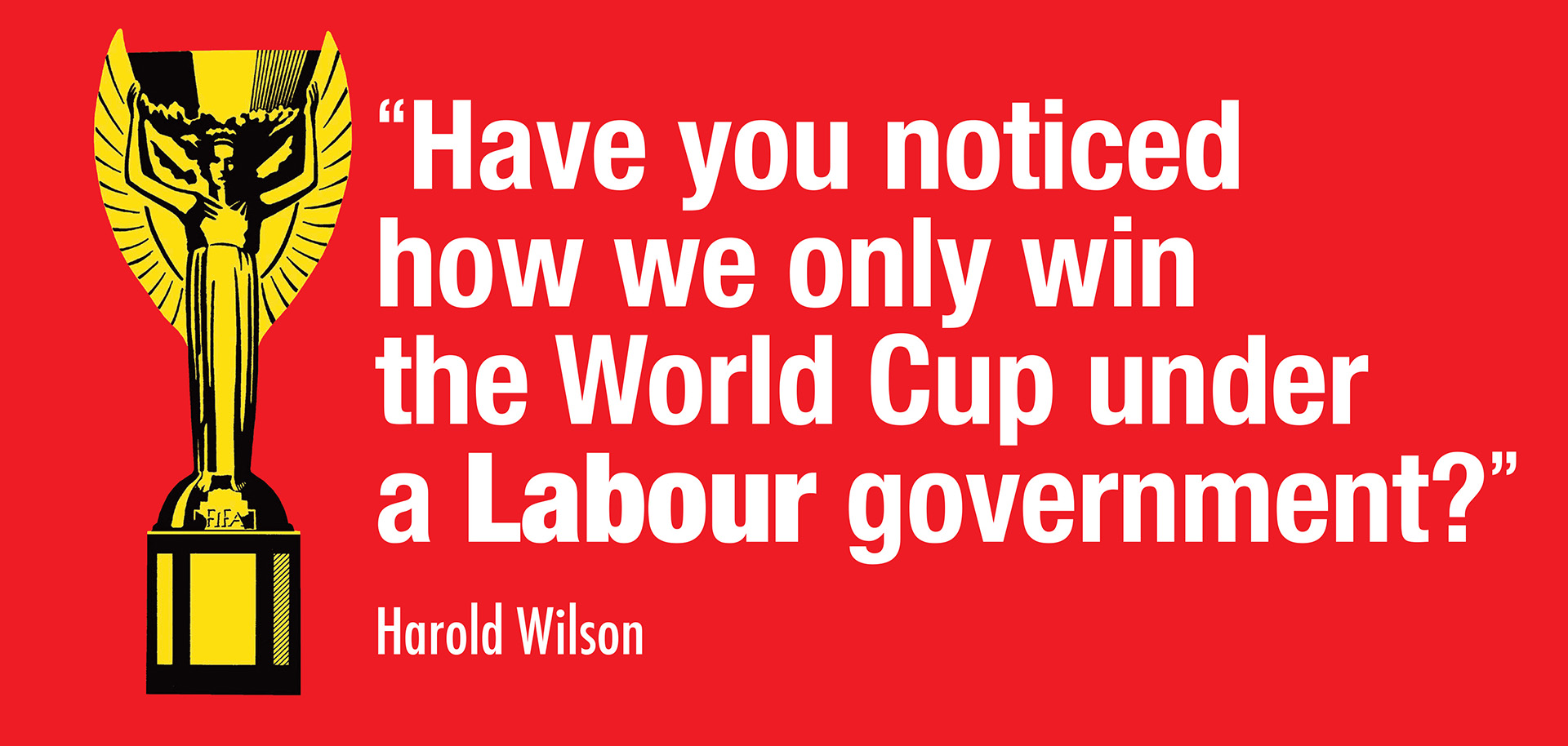
Philosophy Football's Mark Perryman questions who this 'we' is Harold Wilson declares has only won a World Cup under a Labour Government
In March 1966 Harold Wilson's Labour Party won a landslide victory and just four months later Harold was there to celebrate when England for the first, and to date last, time lifted the World Cup. Never mind the (disgraced) Peter Mandelson, England's victory spurred Harold to the greatest piece of Labour spin-doctoring ever.
At the Wembley Final Harold infamously he sent one of his advisers to the BBC matchday studio to suggest the Prime Minister ,and lifelong Huddersfield Town fan, join commentator Kenneth Wolstenholme for some half-time punditry. An invitation that was promptly turned down. P'raps the adviser lacked the (disgraced)silky charm of Peter Mandelson?!
Four years later most unwisely Labour risked their 1970 General Election chances by choosing a date slap-bang in the middle of England's defence of their World Cup at Mexico '70. The quarter-final defeat to West Germany was widely blamed for Labour's defeat just four days later.
Yes, really. Wilson's Minister of Sport, and former football League referee, Denis Howell, was better-placed than most to justify the impact. "The moment goalkeeper Bonetti made his third and final hash of it on the Sunday, everything simultaneously began to go wrong for Labour for the following Thursday,"
Labour and football, eh? Be careful what you wish for. Still at least 1970 General Election victor Ted Heath and his sundry Tory Prime Minister successors have proved incapable of robbing Harold's sound-bite of its enduring truth,
But any kind of relationship between politics and international football in the particular context of England has a broader context than simply an England victory, defeat or draw supposedly being dependent on the party in government at the time.
To understand this, take note of one crucial word that Harold gets spectacularly wrong, 'we'. Great Britain is unique in international football, represented by four - and for the purposes of football at least- independent nations. England, Scotland, Wales and Northern Ireland. It doesn't require either pedantry or nationalism to recognise this. The fact neither Harold nor Keir, who every time a summer football tournament comes around will very publicly choose an England shirt for his go-to leisure wear, fail to understand the significance of football's multinational Britain tells us, or at least it should, everything we need to know about Labour Unionism.
As a Scot Gordon Brown might have thought he was being helpful travelling out to support England at World Cup 2006 in Germany as the British Prime Minister. But precious few England fans were won over by this particular Scot's new-found England fandom while in his native Scotland it went down like a lead proverbial. Of course, not all Scotland fans are nationalists. But in 1992 when Jim Sillars lost his Govan seat he'd won in an infamous 1988 SNP by-election defeat of Labour he angrily denounced the Tartan Army as '90-minute nationalists' it was a very different era to now. The SNP are no longer a minor party via the Scottish Parliament it is a governing party with a formidable number of MPs at Westminster too. Never mind 90-minutes ,a significant proportion of Scots today are 24-houes 365-days-a-year nationalists while in Wales and the North of Ireland Plaid Cymru and Sinn Fein are both in government. Whatever the rights and wromgs Harold got away with 'we' in 1966 he certainly couldn't today. Yet Keir wears his England shirt regardless of what it says to our breaking-up Britain.
Such confusion is both muti-faceted and deep-rooted in Englishness. World Cup Quiz question: which is the only team at this summer's tournament to line up before kick-off without a National Anthem of their own for them and their fans to belt out? England! God Save the King is the National Anthem of the United Kingdom, not England and just try asking the Scotland team to drop Flower of Scotland to join in too.
This isn't pedantry, it gets to the core of Englishness, a contradictory mix of nationalism and unionism. The most vivid example of this recently has been the spate of hanging flags, Union Jacks and St George Crosses, off lamp posts in a movement to 'Unite the Kingdom'. Much of this wrapped up in a version of English patriotism which does little to distinguish itself from bad old-fashioned racism.
Contrast this to what Harold's 'we' has become. The Wembley 1966 final was full of Union Jacks, the St George scarcely present. The tournament mascot 'World Cup Willy' wore a Union Jack. Yes, the only time England has not only won, but hosted too, a World Cup and the FA got our flag wrong. Few England fans this summer will make this mistake, the St George Cross universal, home and away. And in sheer numbers will absolutely dwarf those of the lamp post hangers too. And the purpose dwarves them too. A St George Cross celebrating a multicultural team managed by a German on its own doesn't make for an anti-racist, Europeanised England but given the popular-political will are very welcome first steps in both directions.
In July 2024 Keir Starmer's Labour Party won a landslide victory and just two years later Keir was there to celebrate when England for the second time lifted the World Cup at the New York New Jersey stadium.
Well, that's one Labour pledge all of England can get behind.
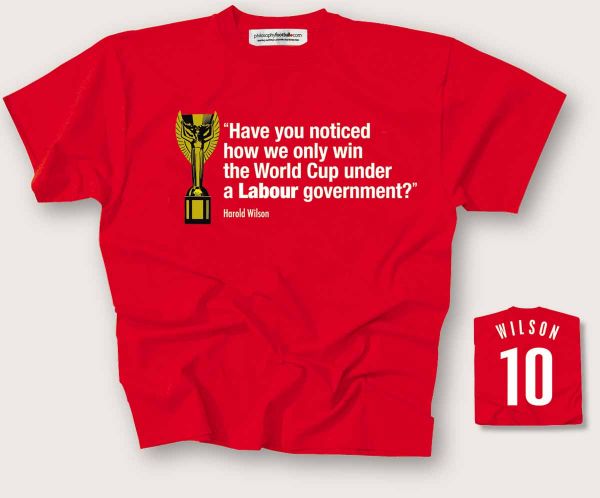
T-shirt The Philosophy Football Harold Wilson T-shirt is available here
Mark Perryman has written a number of books on football, national identity and Englishness including 1966 and Not All That and is the co-founder of the self-styled ' sporting outfitters of intellectual distinction' aka Philosophy Football
The Death of Innocence
27.12.25
Philosophy Football's Mark Perryman portrays John Robertson as a symbol of all that was good about the European Cup
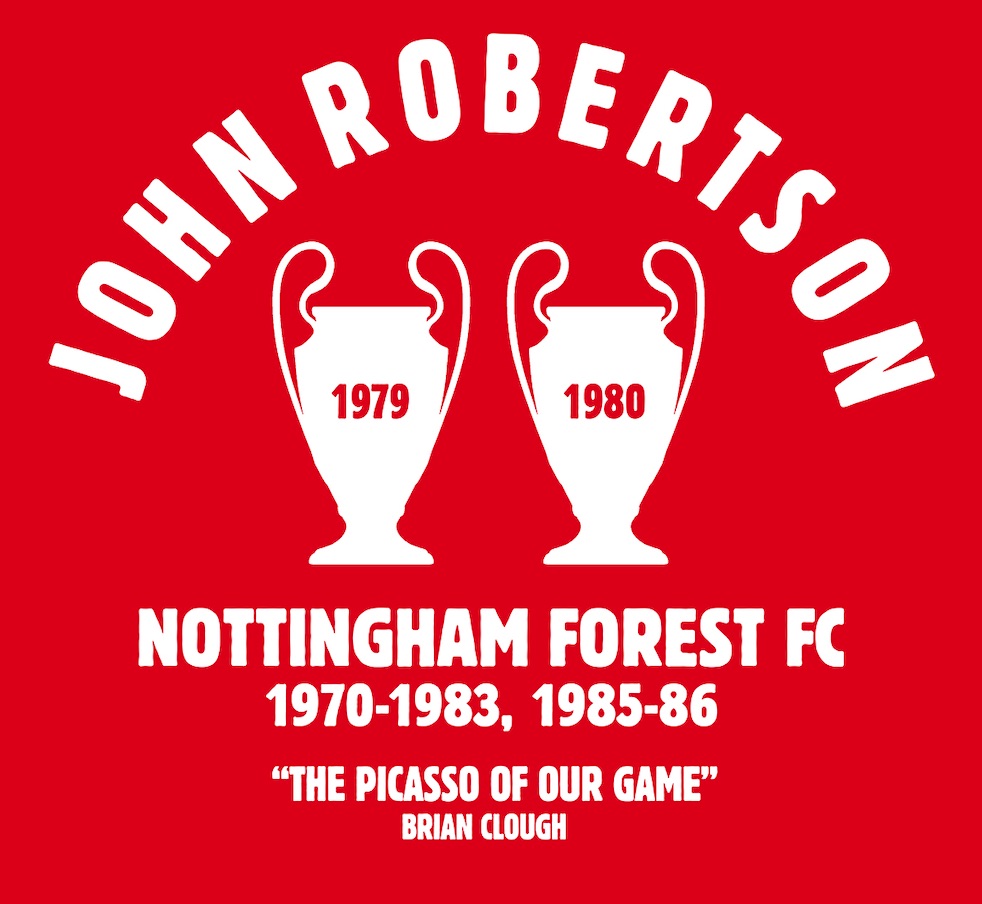
OK England's relationship with European football didn't exactly begin well.
1955 the first European Cup. Chelsea, the First Division champions, are banned from entering by the FA, the competition is not considered as in the best interests of English football.
The competition itself is a knockout competition, two legs home and away, league champions only, no seeding. The classic FA Cup model before it too was bastardised, but that's another sad tale to tell.
The first five years marked by dominance, Real Madrid win all five competitions 1955-1960. The birth of a popular, Europeanised, football culture. The 1960 Real Madrid v Eintracht Frankfurt final, Hampden Park, crowd of 127,671, 7-3, BBC televised it, across Europe an estimated 70 million watched the game (terrestrial, no satellite TV). The greatest football match ever? And expansion, 26 nations league champions entered, up from 16 in 1955.
But tragedy too. In 1958 The Munich Air Disaster, Manchester United 's plane crashes on the way back from playing Red Star Belgrade in the quarters. Liverpool yes Liverpool, lend United players so they can complete their season. The following European Cup in another act of footballing solidarity United are invited by UEFA to enter. No such compassion from their own FA mind, who quite extraordinarily refuse to allow United to do so.
Through the 1960s the competition continues to expand. The champions of Norway, Malta, Albania. Iceland all join the competition. In 1966 Yugoslavia’s Partizan reach the semis, the first team from Communist Eastern Europe to do.
1966-67 The Champions of the Soviet Union enter for the first time. Celtic win against Dukla Prague from (East European Communist) Czechoslovakia in the semis having beaten Yugoslav (ditto) side Vojvodina in the quarters. In the final, they beat previous champions Inter. The first ‘British’ side to reach the final, and win. But this was of course an entirely Scottish victory, shaped by the sectarian divide. tho’ famously the entire Celtic team was born and grew up in Glasgow. In the first 12 years of the competitiion there had been Spanish, Portuguese, Italian and now Scottish champions of Europe.
And in 1968 Man Utd, become the first English Champions, winning the trophy, after extra time. At Wembley, incredibly exactly ten years on from Munich Air Disaster.
United's goal-scorers in the Final? Bobby Charlton (2) Brian Kidd and George Best. The core of the team: Bill Foulkes David Sadler, John Aston, Nobby Stiles, Shay Brennan and Tony Dunne. As Eamon Dunphy puts it in his superb book on Matt Busby and the troubled succession years (an essential read to understand the troubled Ferguson succession) A Strange Kind of Glory "all had graduated from Busby’s School of Excellence, the car park at Old Trafford.”
Today United's support comes from all parts of the British Isles, not to mention the entire globe on a national and international scale that their latterday rivals, Arsenal, Chelsea and Manchester City, and in recent years, more successful too, can only dream of is put down to a better marketing operation. But its origins lie not in the antics of marketing gurus, instead in the national outpouring of sympathy following 1958 and a nationwide celebration of recovery via victory in 1968 that all but the most embittered would join in. I can still remember my cub scout Saturday morning football side the autumn after all turning up in red shirts, white collar and cuffs. Not ridiculously expensive bri-nylon replica shirts plastered with sponsors' logos in those days, but young boys pestering our parents all summer long to find a top that would make us look like, if not play like, our heroes, in deepest Surrey!
But it wasn't all good. By the 1970s a growing reputation for English hooliganism was crowned by Leeds fans when in 1975 their club reached the European Cup Final, only the second English club to do so, only to fill the stadium with a riot following defeat by Bayern Munich. Other countries had equally bad reputations for football hooliganism domestically, the difference was England exported it.
However happier news was to come. 1977, Liverpool beat Borussia Mönchengladbach in the Rome final. Foreign players? Joey Jones Wales, Steve Heighway Republic of Ireland. English manager Bob Paisley. The first of six consecutive wins by English league champions.
John Williams, Liverpool fan and author of the definitive social history of the club described the post-match celebrations: “The extraordinary party in Rome after the 1977 final involved Reds supporters and the players together. These groups were still broadly drawn from the same stock, drank (and got drunk) in the same pubs, had pretty much similar lifestyles and diets, and footballers had not yet moved into the sort of wage brackets that later had them sealed off behind tinted-windowed cars the size of small armoured trucks.”
Liverpool won a second consecutive European Cup in 1978 and again in 1981. But in-between unarguably the greatest European Cup achievement of all.
1978-79 Brian Clough’s Nottingham Forest knock out holders Liverpool in the 1st round. Forest win the first of two consecutive European Cups with three foreign players, all Scots Kenny Burns, John McGovern, John Robertson, two more Scots as unused subs plus Northern Ireland’s Martin O’Neill.
1979-80 Forest's unique record is that they have won the European Cup more times than their domestic league Forest's tea in the final, three foreign players, all Scots, plus one sub, English manager, beat Hamburg.
And John Robertson, one of those Scots, was central to this incredible achievement. 243 consecutive games for Nottingham Forest December 1976 - December 1980. In that amazing run he scored the winner for Forest in the 1978 League Cup Final, was key to the team winning the 1977-78 First Division, provided the cross that Trevor Francis put away to win the 1979 European Cup and the winner to retain it in 1980.
Daniel Taylor, football writer and Nottingham Forest fan, sums up the magnitude of the achievement John was such a major part of, perfectly:
“Forest’s rise to the top, lest it be forgotten, took place when only the champions of each country and holders could compete in the European Cup. There was no safety net of multiple group stages to guard against the occasional defeat here and there and the legacy, thirty-five years on, is that Nottingham had won the competition more times than London (now equalled), Paris, Berlin, Moscow and Rome – with a combined population of 30.4 million- altogether. It took Manchester United, champions in 1968, another thirty-one years to win the European Cup for a second time – Ferguson’s win in 1999 coming at his fifth attempt – and it was 2012 when Chelsea finally notched one up for London. Arsenal, Tottenham and all the others are still on the waiting list.”
And what we have now is 'The Champions League.' In a feat of newspeak that would do Orwell proud UEFA has rewritten the entire history of the European Cup as The Champions League when until 1992-93 it wasn't. A 'Champions' league which isn't any such thing. 'Champions and Rich Runners-up League' might not attract such high value sponsors yet stands as an infinitely more accurate description. Or in its latest expanded incarnation, ' Champions, Rich Runners-up and Also-rans League.' On what possible basis can a club that has finished 4th, 5th or even 6th be described as a 'Champion'? Wealth, of course. The purpose of replacing the European Cup with a league format was absolutely explicit.To protect and multiply the wealth of what are what are already the wealthiest clubs and leagues.
A knockout competition, teams drawn randomly to play each other, no seeding, home and away legs, threatens all of this. Tough, its called sport. And what this means is that John Robertson's achievement, a player for a club outside the very wealthiest, of two European Cup Winner's medals will almost certainly never be repeated. And that is the absolute antithesis of what a European Cup should be about. .
John Robertson tribute T-shirt available from Philosophy Football
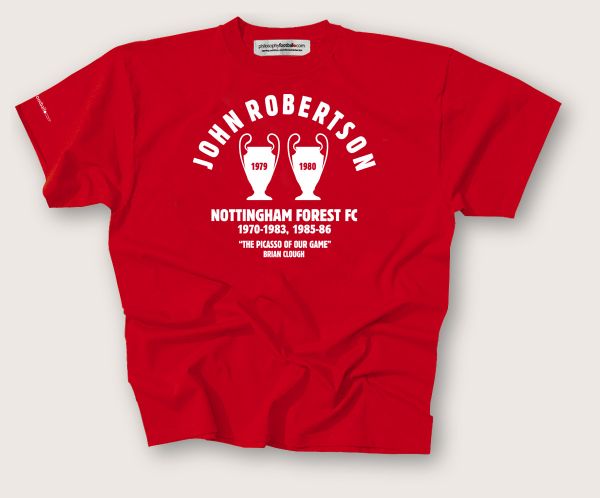
Mark Perryman is the co-founder of the self-styled 'sporting outfitters of intellectual distinction' AKA Philosophy Football
Thatcherism Today
04.10.25
Philosophy Football's Mark Perryman calls time on the forthcoming Thatcher Centenary
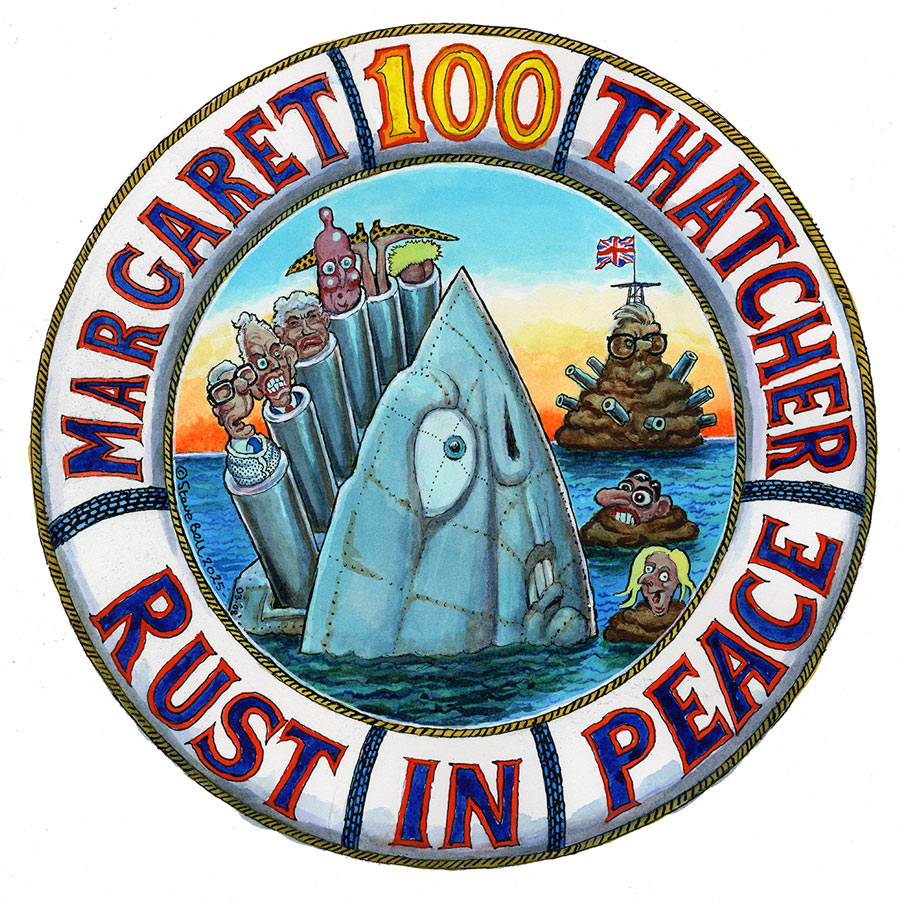
Margaret Thatcher's 13 October 2025 centenary is a moment to reflect on how she, or more accurately 'Thatcherism', so decisively shaped the 1980s. And for ever more too, the post-war consensus she deconstructed and to date never to return.
The Labour historian Jim Fyrth describes what framed this consensus that had previously so decisively shaped British society and economy 1945-79.
"A mixture of Socialist, Labour, Keynesian, Fabian/Liberal and anti-Fascist ideas that was strongly anti-establishment and anti-capitalist, and was hostile to those who were held responsible for poverty and unemployment and for appeasement of the Fascist dictators."
Wow! It was this combination that was the basis of Labour's 1945 strength, what Fyrth admiringly dubs a 'popular front of the mind' the plurality of influences and ideas, the breadth of support. And it is this which produced an historically unique moment:
" It looked as though Conservative supremacy in society might be quite overthrown and a new hegemony of the Left be established."
But despite the populist idealism of Aneurin Bevan 'We have been the dreamers, we have been the sufferers, and now we are the builders' any likelihood of a ' hegemony of the left' was replaced by the early 1950s, and thereafter by a consensus between right-wing Labour and progressive conservatism. Popularly known as 'Butskellism' fusing Hugh Gaitskell, Labour leader 1955-63. with Tory Cabinet Minister Rab Butler 1951-64. Better than what followed when another '-ism', Thatcherism, dismantled that consensus but by no means as good as it might have been.
Stuart Hall prefaced the entrenchment of Thatcherism that would commence with her leading the Tories' rout of Labour in the May 1979 General Election with an essay for the January 1979 edition of the magazine Marxism Today. It was this essay 'The Great Moving Right Show' that would spark a wide-ranging debate not only on Thatcherism but what Hall argued facilitated it, a deep-seated structural and ideological crisis of the left.
As Hall developed his description of the Thatcherite project it became more and more terrifying, but inspiring too. Terrifying in so far as what Thatcher was able to achieve, inflicting defeat after defeat on her opponents most spectacularly the miners' strike of 1984-85. Inspiring, in so far as what Labour, and the wider left, could achieve with a hegemonic project on the scale of Thatcherism.
Hall listed those elements required for a hegemonic project to succeed:
" The attempt to put together a new 'historical bloc'; new political configurations and 'philosophies': a profound restructuring of the state and the ideological discourses which construct the crisis and represent it as it is 'lived' as a practical reality; new programmes and policies, pointing to a new result, a new sort of 'settlement'."
Of course, none of this appeared in the Tories' manifesto nor in Thatcher's campaign speeches and broadcasts. And no I'm not suggesting that because they didn't appear on Blair's 1997 pledge cards nor in and amongst Starmer's 2024 missions this is the damning evidence required that 'The Great Moving Right Show' has never been superseded by 'The Great Moving Left Show' But read through Hall's list and ask yourself is this what Blair(ism) and Starmer(ism)'s politics amount to?
And if they don't is it enough when Labour achieves the kind of landslide victory Blair did in 1997 and Starmer in 2024? Hall's argument was that Thatcherism had all the makings of success, her utter destruction of a post-war consensus that had lasted since 1945. In contrast the complete failure of Blair, and Starmer, to replace Thatcherism/Neoliberalism. Helpfully Hall detailed what elements would be required for such a break:
" These do not 'emerge': they have to be constructed. Political and ideological work is required to disarticulate old formations, and to rework their elements into new configurations."
Blair's legacy, Starmer's prospects, should be judged precisely in how far they fulfil this task. For all the good, and there was a lot, that Blair did, and all the good that Starmer will do, which I entirely expect there will be, this surely is the least we can expect of Labour governments. But to use a now favourite word in Labour's lexicon 'change' without that construction, disarticulation and reworking, no new consensus will be established. What a waste.
Following the 1979 General Election, in his essay 'Thatcherism: The Impasse Broken?' the editor of Marxism Today,Martin Jacques, mapped out why the Thatcherite hegemony was as much a product of a crisis of what the 1945 Labour vision, 'Now Win the Peace', had turned into, as a victory of the right.
Jacques described this shift as from a project of transformation to an ever-increasing emphasis on modernisation, sounds still familiar? The newly elected Labour leader, Harold Wilson had prefaced this change in his speech to the 1963 Labour conference:
"In all our plans for the future, we are re-defining and we are re-stating our socialism in terms of the scientific revolution. But that revolution cannot become a reality unless we are prepared to make far-reaching changes in economic and social attitudes which permeate our whole system of society.
The Britain that is going to be forged in the white heat of this revolution will be no place for restrictive practices or for outdated methods on either side of industry."
Jacques set out what this produced in turn:
" The strategy of modernisation it sought to carry through - aimed at a major transformation of the economy and society - proved not only completely inadequate relative to the nature and scope of the problem but, crucially, it also involved a new kind of attack on the position of the unions and, more widely, the working class, that is on its own social base."
The effect wasn't immediate, Labour's 1945 election-winning vote share of 47.8% was still as high as 47.9% when Harold Wilson won in 1966, an impressive holding of the electoral ground. But after that the decline was non-stop, coming to a shuddering halt on 36.9% in 1979 (note Starmer's 'landslide' was an even lower Labour share of the vote, 33.7%.) Likewise, Labour membership reached a post-war high of 908,000 in 1950 but after 1964 fell every year to 676,000 in 1978. The current 2025 figure is under half that, 333,235.
The reason for the decline and Labour's defeat in 1979? Jacques argued:
" Labour has become identified with the increasing use of the state in an administrative, impersonal, bureaucratic and even authoritarian manner."
He described the implications as 'profound':
"The Labour Party for many people, especially young people, is no longer seen as an effective oppositional, anti-establishment force; on the contrary, for many it has become an establishment party, partially incorporated into the state structures....
... Inevitably, this has undermined the position of the Labour Party as a party, rooted in society, enjoying a popular activist base, and committed to reforming society."
The post-war consensus which Labour had founded in 1945 followed by Labour's 1960s flirtation with a technocratic modernism was ignominiously ended by the 1978-79 Winter of Discontent. An outpouring of angry strike action as layer after layer of low-paid workers resisted the poverty imposed on them by Labour's state-sanctioned programme of wage restraint. Be careful what you wish for? Sure, but own a crisis that was every bit Labour's making as Thatcher's windfall. Statism that was once the glorious shock of the 1945 new replaced by an alien, bureaucratic, inefficient state that was no match for the right to buy your own home, become a shareholder in an unfettered public utility, bring bright, shiny, new management practices to a failing NHS. This was modernisation, and then some. To which Labour had no effective answer because it had helped create the need for such drastic, if disastrous, action, in the first place. What a gift, the consequences we've been living with ever since. Time to wish Happy Birthday Maggie! Maggie! Maggie! With the inevitable Out! Out! Out!
Thatcher Centenary Steve Bell design exclusive to Philosophy Football and available as a mug, tea towel,T-shirt and framed print here.
Mark Perryman is the co-founder of Philosophy Football.
Top